Extend the value of your Microsoft E5 and E7 investments with Ent

A file upload, a script or an AI prompt can be routine work or part of a harmful sequence. To protect that work, security teams need to know what the person or agent is doing, which data is involved and what happened before the action.
Lou and I spent more than five years at Microsoft working on security products, including Microsoft Security Copilot. We know how the stack fits together and how customers use it. We built Ent to connect actions across applications, AI tools and software, apply policy at the endpoint and bring that intent-aware evidence into Microsoft investigations.
We’re joining the invitation-only Microsoft for Startups Pegasus Program to bring this approach to more Microsoft customers. Ent complements Microsoft Defender XDR, Microsoft Sentinel, Microsoft Purview, Microsoft Intune, Microsoft Entra ID and Microsoft Security Copilot, helping organizations get more from their E5 and E7 investments.
“We’re excited to welcome Ent to the Microsoft for Startups Pegasus Program. With AI becoming more mainstream, organizations need confidence that both people and agents can work securely. Having worked with Elias Manousos and Brandon Dixon at Microsoft, Ent’s understanding and architectural approach complements Microsoft's security suite. Through Pegasus, we look to further strengthen our relationship, while helping customers oversee AI and applications, secure data, prevent AI-powered threats, and protect work,” said Kevin Magee, Global Head of Industries, Microsoft for Startups at Microsoft.
Three outcomes for security and IT teams
Prevention at the point of action: Apply local policies to warn, guide or block risky actions by people and AI agents. Ent evaluates the data, application and surrounding activity so teams can intervene before sensitive information moves or a harmful action completes in supported workflows.
Faster human response: Give analysts an activity timeline, identity context and supporting evidence so they can assess risk and act sooner. The same evidence helps data security and IT teams decide which transfers, applications or components need attention.
AI-first security operations. Use endpoint evidence and intent assessments in AI-led investigation and triage. Configure automatic closure for cases assessed as benign, and send threats or uncertain cases to analysts with the evidence attached.
Microsoft Defender XDR: Resolve incidents with evidence of what happened
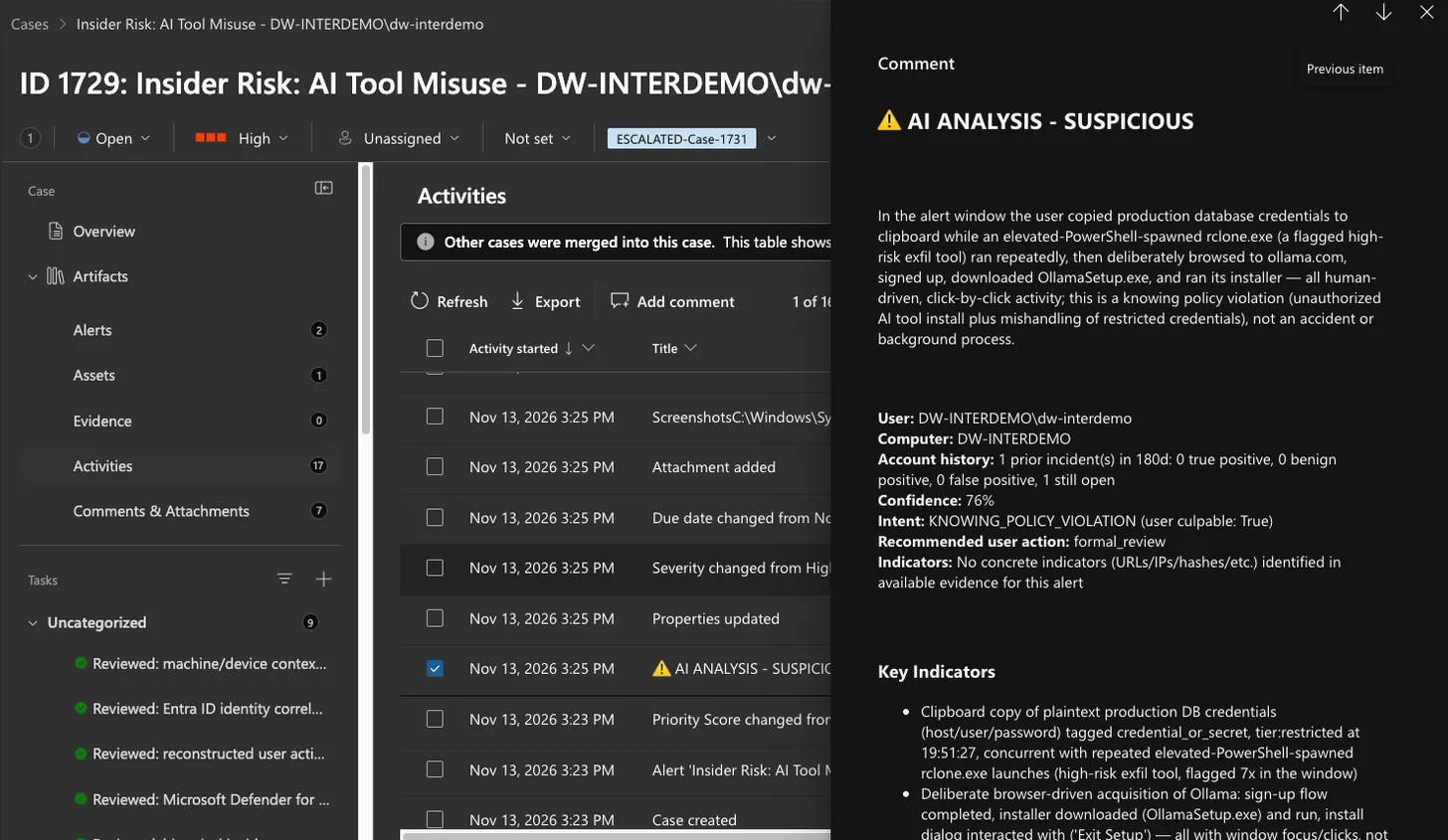
Ent brings an endpoint activity timeline, an intent assessment and supporting evidence directly into Defender XDR incidents. Analysts can establish whether a person or agent acted on a threat and what happened next. For example, for a phishing alert, they can check whether the user engaged with it or took no action.
Ent’s AI-led assessment helps distinguish deliberate activity, social engineering compromise, unapproved activity, and mistakes. Teams can configure automatic closure for cases assessed as benign and escalate threats or uncertain cases with the evidence needed to respond. The assessment stays in the Defender incident where analysts work.
Microsoft Sentinel: Hunt across activity and automate security workflows
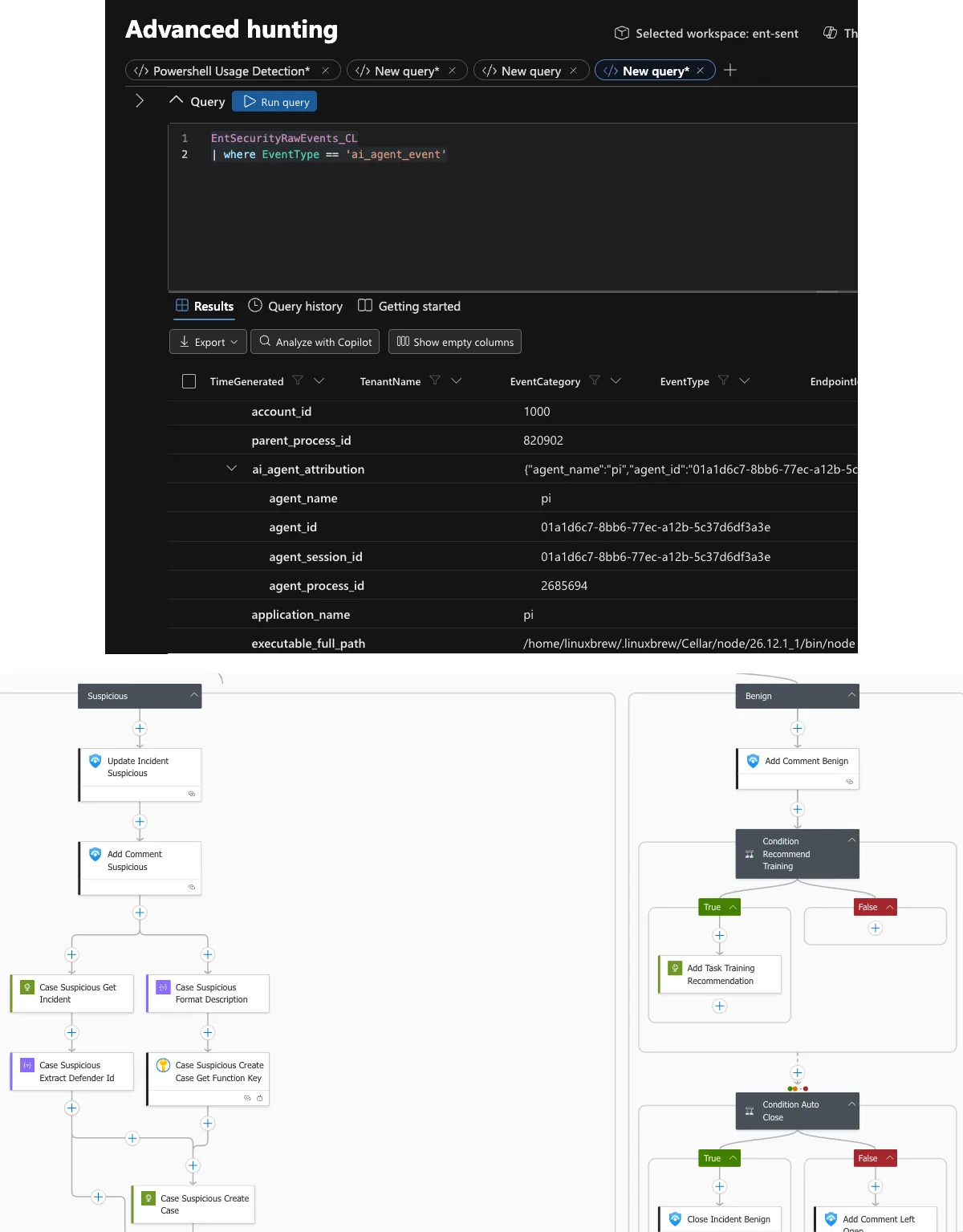
Ent makes endpoint telemetry available in Microsoft Sentinel alongside the organization’s other security data. Teams can use KQL(Kusto Query Language) and analytics rules to hunt for data exfiltration, AI tool misuse and abuse of remote-access tools, including patterns that span users, devices or incidents.
Ent’s playbooks combine endpoint evidence with alert entities, identity information and incident history for AI-led investigations. Teams can use the results to create review tasks, preserve evidence and coordinate configured responses across their security tools.
Microsoft Purview: Extend sensitive data protection to endpoint workflows
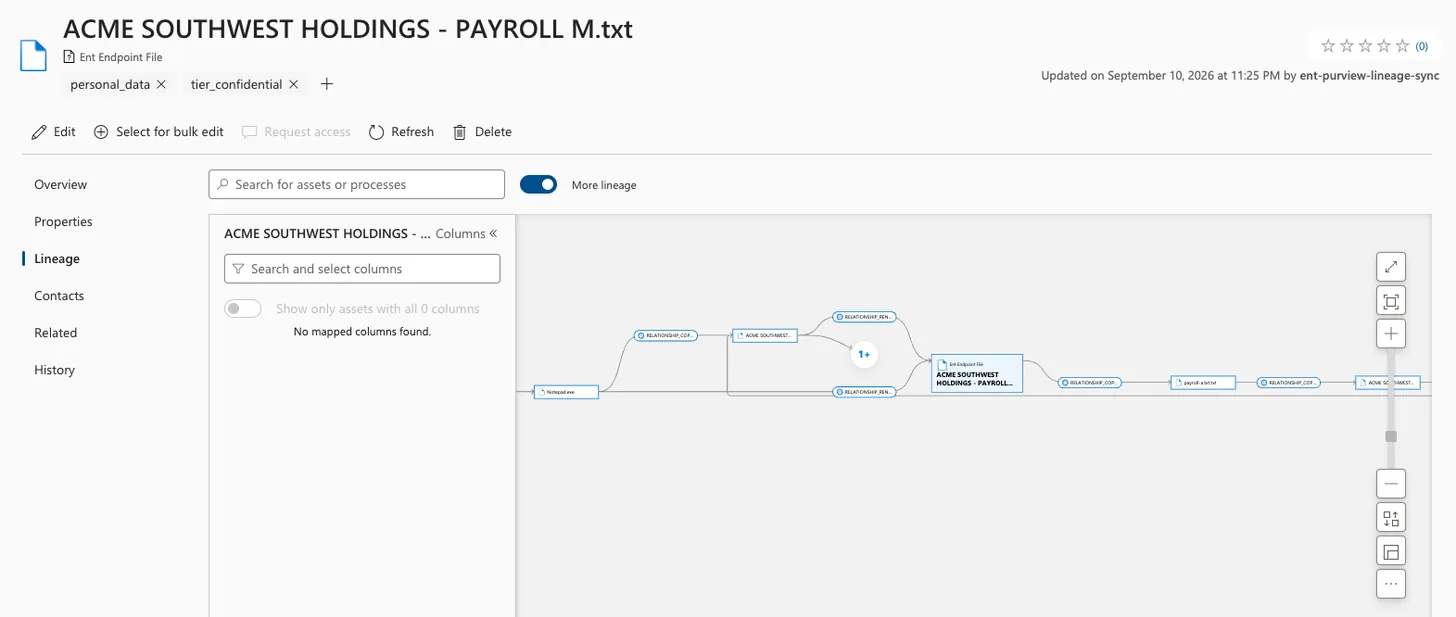
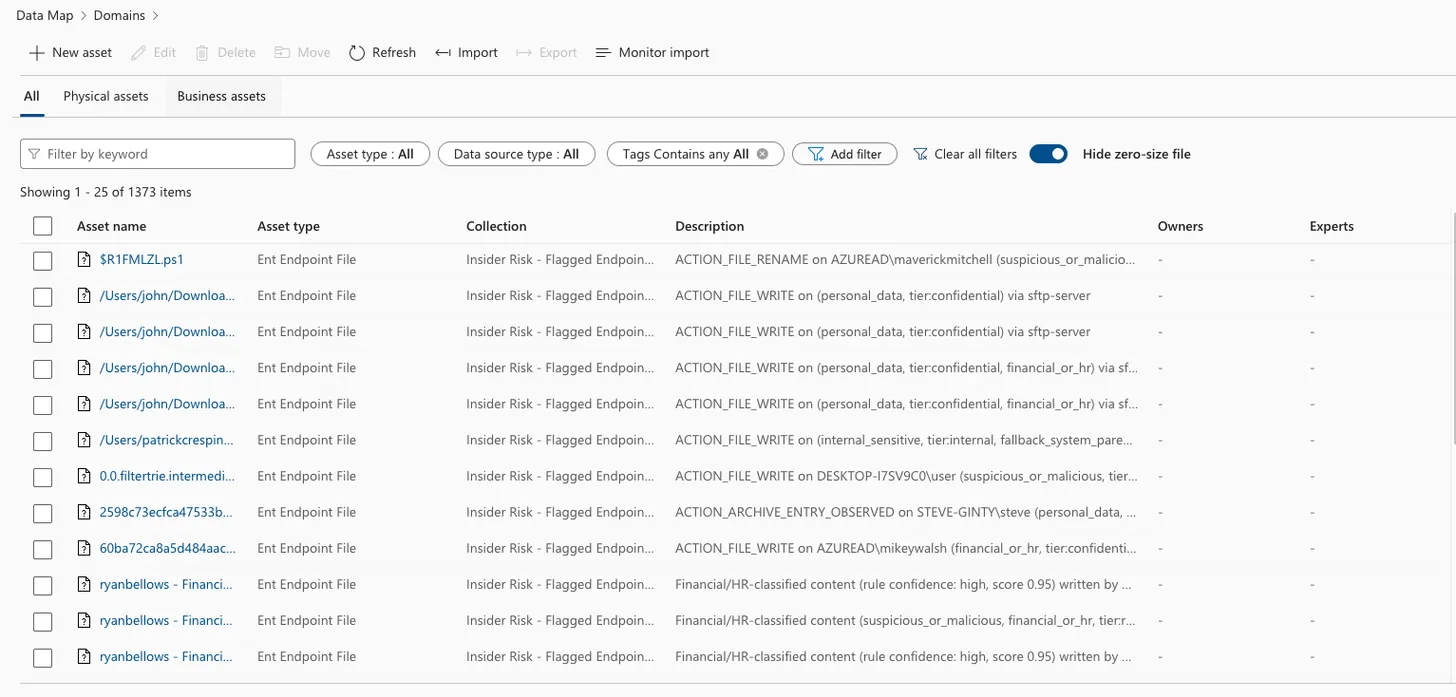
Ent uses existing Microsoft Purview sensitivity labels and can classify files locally on the endpoint. File lineage follows observed copies, renames and transfers to removable media. Teams can use sensitivity and the surrounding activity to guide or block supported transfers.
Ent brings observed endpoint files, labels and lineage into Microsoft Purview Data Map so teams can trace data movements back to their source. Purview Data Loss Prevention alerts enter Sentinel’s triage workflow, where analysts and AI-led assessments can use Ent’s evidence to review the destination, sequence of actions and response required.
Microsoft Entra ID: Bring identity into prevention and response
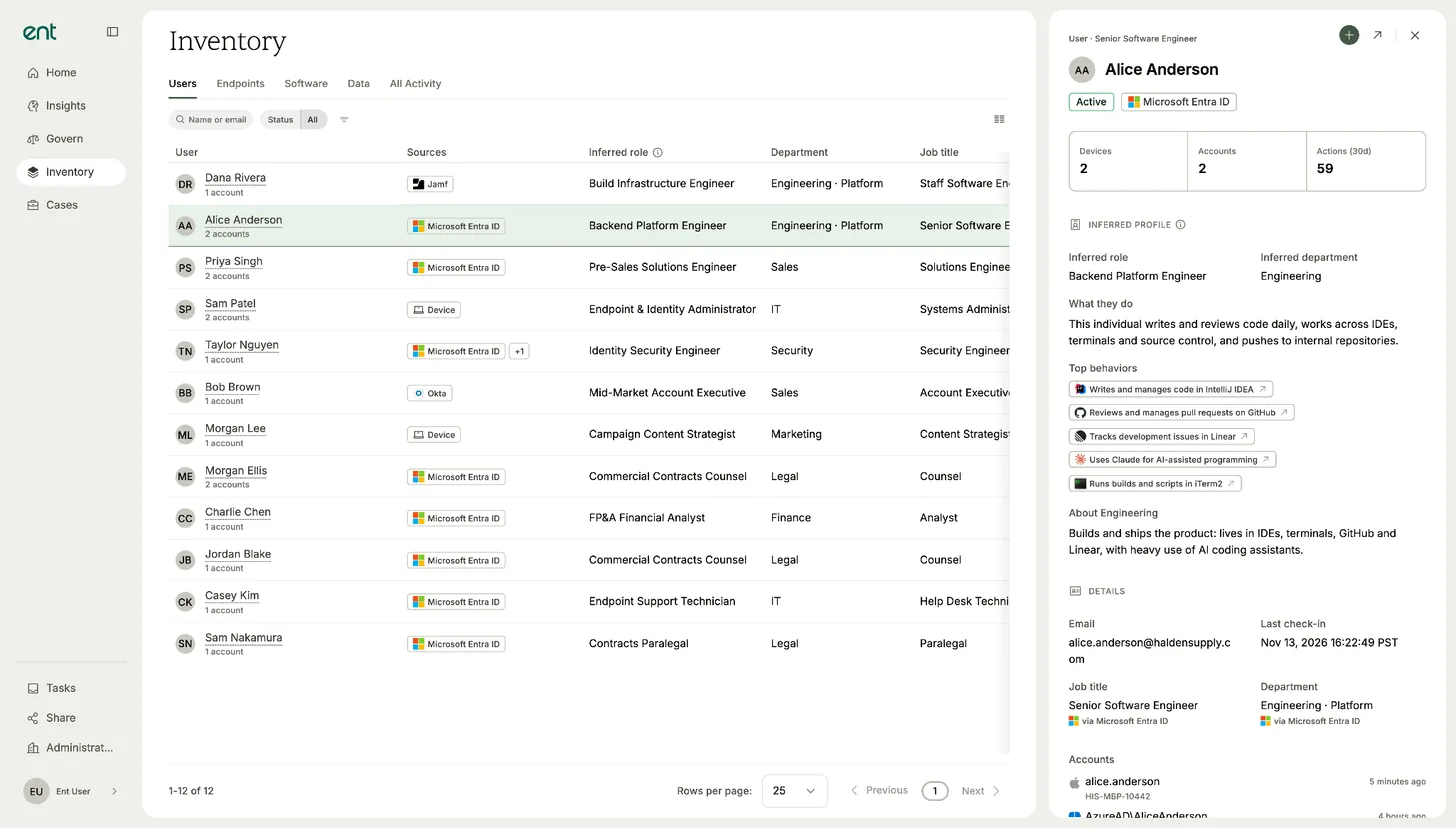
The same action can carry different risk depending on who takes it and what their role allows. Ent adds user, role and device context from Microsoft Entra ID to endpoint investigations. Analysts and AI-led workflows can use that context to assess intent and decide how to respond. Ent applies local policy to supported actions on the device.
Direct integration of Ent risk scores into Microsoft Entra Conditional Access is planned. The aim is to give access policies the endpoint activity and risk behind an authenticated session when deciding whether to require additional verification, limit access or block a session.
Microsoft Intune: Extend software visibility and control
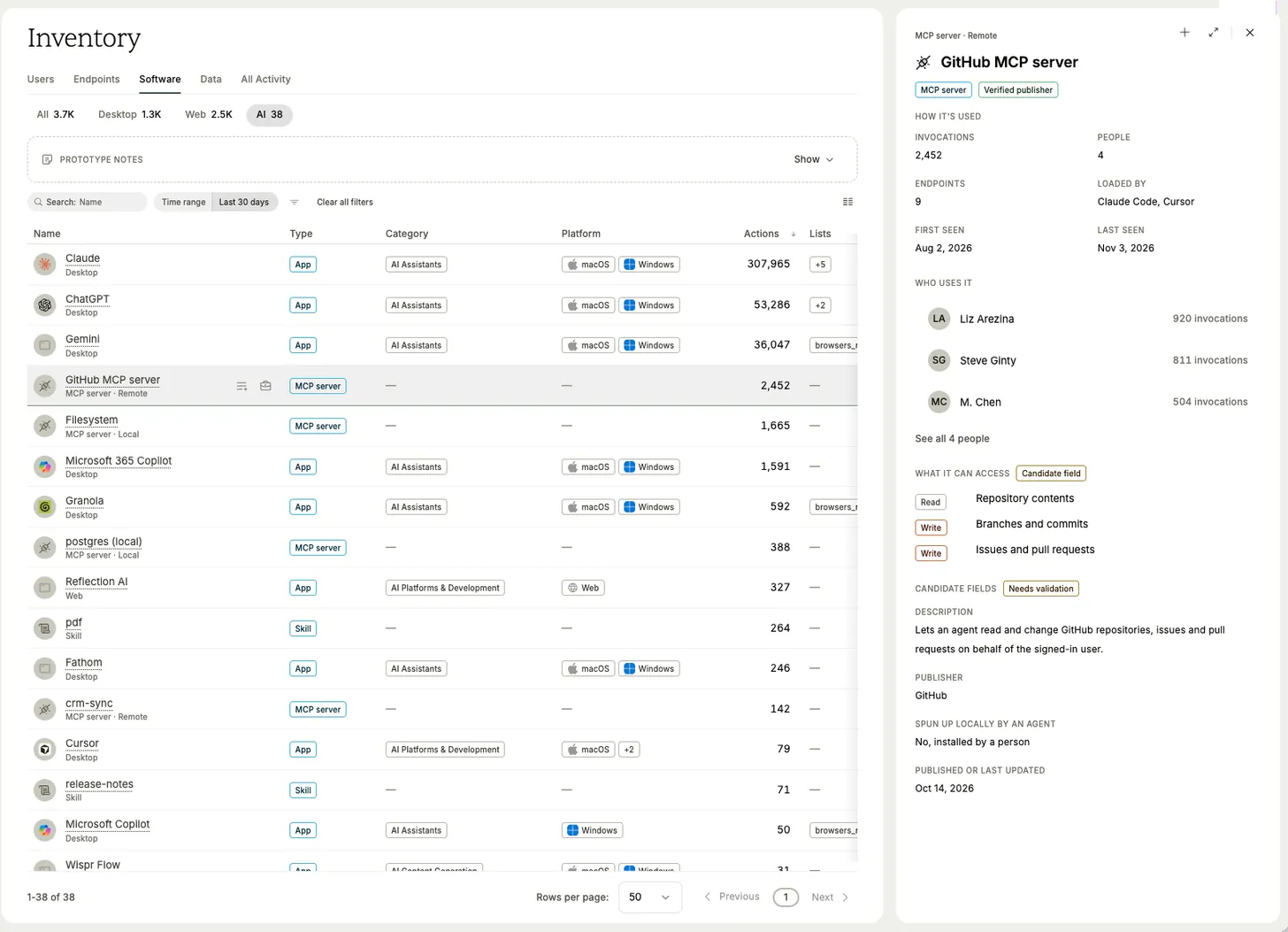
Ent complements Microsoft Intune with visibility into AI software on the endpoint, including applications, Model Context Protocol (MCP) servers, skills and plugins. Teams can see which components are present on managed devices and apply Ent policies to control supported application and AI workflows, including blocking unsanctioned tools.
Ent also tracks browser extensions, software packages and legitimate software that can be abused, including remote monitoring and management (RMM) tools. Threat intelligence and activity context help teams identify risky components and distinguish authorized remote support from suspicious use. Ent integrates with Windows Defender Application Control (WDAC) to complement application control on Windows devices.
Microsoft Security Copilot: Accelerate AI-driven investigation
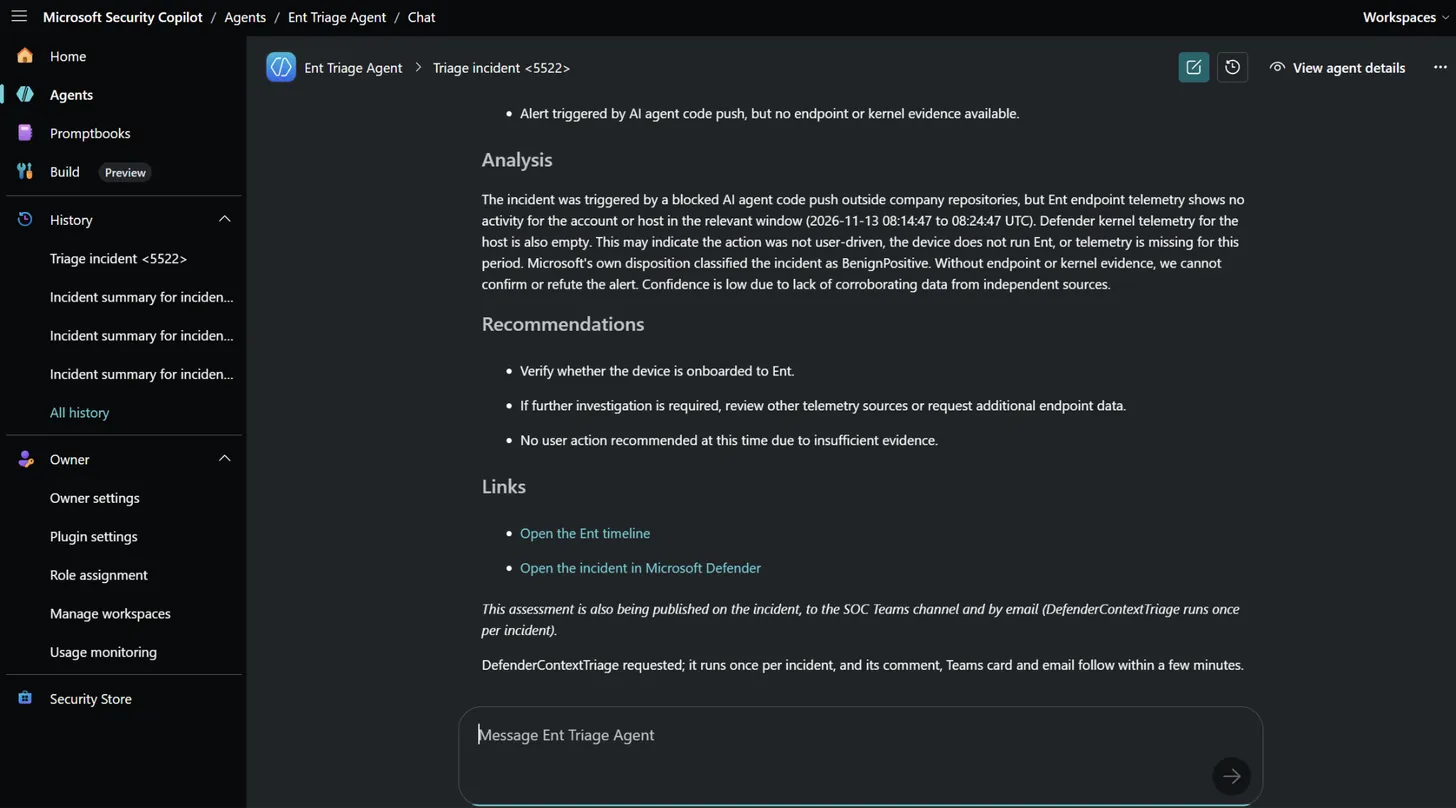
The Ent endpoint plugin for Microsoft Security Copilot lets analysts ask questions about Ent’s telemetry in Sentinel using natural language. Copilot can use endpoint evidence and intent assessments to investigate an incident and help analysts determine the next step.
An analyst can ask which processes ran, whether activity was automated and what sequence led to an alert. The plugin lets analysts examine the evidence and ask follow-up questions without assembling every query.
Deploy within your Azure tenant
Ent can be deployed entirely within a customer’s Azure tenant, keeping data and service processing within the customer boundary. Organizations can run Ent using Azure infrastructure in their own subscription and retain control over the environment hosting the service.
Eligible Azure infrastructure and service consumption used to host and power Ent can count toward a customer’s Microsoft Azure Consumption Commitment (MACC), subject to the customer’s agreement. Eligible Ent purchases through Microsoft Marketplace may also count toward that commitment, subject to the offer and purchase terms.
Extend prevention across your Microsoft environment
Ent is available through Microsoft Marketplace. Talk to us about the workflows your team needs to protect and how Ent fits your Microsoft environment.
Meet the Ent team at the Microsoft for Startups Innovation Basecamp during Microsoft Ignite in San Francisco, November 17 and 18, 2026, or book time with the team at ent.ai/contact.