The 13 Best Endpoint Security Tools For 2026

Every device on your network is a way in for attackers. Endpoint security tools decide who and what gets through, and the category has changed fast. Antivirus became next-gen prevention, then detection and response, then cross-domain platforms.
Now there's a new kind of user on the endpoint. AI coding agents and assistants run with a person's permissions and move at machine speed.
This guide covers the main types of endpoint security tools, the gap AI agents create, and 13 platforms worth a look in 2026. It ends with a practical checklist for choosing one.
TL;DR
- Endpoint security has converged. Most leading platforms now bundle prevention (EPP), detection and response (EDR), and often cross-domain correlation (XDR) in one agent.
- CrowdStrike Falcon, Microsoft Defender for Endpoint, and SentinelOne Singularity lead on device-level protection. Ten more options round out the list below.
- Traditional tools look for malicious behavior. An AI agent doing something harmful through its normal, authorized actions doesn't look malicious at the process level.
- Ent is the AI endpoint security platform for human and agentic work. It understands actions in sequence and the intent behind them, then controls execution before risk becomes an incident. It complements an existing EDR or XDR.
What Are Endpoint Security Tools?
Endpoint security tools are software that protects laptops, desktops, mobile devices, and servers from malware, ransomware, phishing, and unauthorized access. They run on the device itself, usually as a lightweight agent reporting to a cloud or on-prem console. Modern platforms layer prevention, detection, and response into one product.
Three things shape the category today:
- Endpoint vs. network security: Network security watches traffic between systems, while endpoint security watches what happens on each device.
- Why it's changing fast: Remote work pushed devices off the corporate network. Cloud apps moved data into the browser. AI agents now act on endpoints with a user's own access.
- What "endpoint" covers: Workstations, servers, virtual desktops, mobile devices, and increasingly the AI tools running on them.
Types Of Endpoint Security Tools
Vendors use a lot of overlapping acronyms. Here's what each category does and how they fit together.
- Antivirus and next-generation antivirus (NGAV): Antivirus blocks known malware by matching signatures. NGAV adds machine learning and behavioral analysis to stop new or fileless threats that have no signature yet.
- Endpoint protection platforms (EPP): A prevention-focused suite that typically combines NGAV, a host firewall, device control, and exploit protection in one agent.
- Endpoint detection and response (EDR): Assumes some attacks will get past prevention. It records endpoint activity continuously, flags suspicious behavior, and gives analysts tools to investigate, isolate hosts, and roll back changes.
- Extended detection and response (XDR): Pulls EDR telemetry together with data from email, identity, cloud, and network tools. The goal is one correlated view of an attack that crosses those domains.
- Unified endpoint management (UEM) and mobile device management (MDM): These tools handle configuration, patching, and policy across a device fleet. They aren't threat detection tools on their own, but they control the baseline that security tools depend on.
- Data loss prevention (DLP) and encryption: DLP tools watch for sensitive data leaving through email, uploads, USB, or copy and paste. Full-disk encryption protects data if a device is lost or stolen.
- User and entity behavior analytics (UEBA): Builds a baseline of normal behavior for users, hosts, and service accounts. It flags deviations like unusual logins, odd access patterns, or large data transfers. It usually runs in a SIEM across identity, cloud, and network logs to catch insider threats and compromised accounts.
Most enterprise products now blur these lines. A single "converged" agent often delivers NGAV, EPP, EDR, and an XDR upgrade path, plus some device control or DLP. The labels still help when you compare what a given tier actually includes.
The Gap Traditional Tools Miss: AI Agents At The Endpoint
Legacy EDR and XDR were built to catch malicious behavior and known attack patterns. That model is under pressure from two directions.
- First, attackers already operate through legitimate tools and credentials. This is exactly the territory AI agents occupy. CrowdStrike’s 2026 Global Threat Report found that 82% of detections in 2025 were malware-free. Average eCrime breakout time fell to 29 minutes, and the fastest observed was 27 seconds.
- Second, AI agents are now ordinary workplace software. In the 2025 Stack Overflow Developer Survey, 84% of developers said they use or plan to use AI tools, and 31% currently use AI agents. Gartner predicts 40% of enterprise apps will feature task-specific AI agents by the end of 2026, up from less than 5% in 2025.
Why agents look like normal work
Coding assistants such as Claude Code, GitHub Copilot, and Cursor run as authorized, trusted processes. They read files, run shell commands, call APIs, and move data the same way the developer would. To a detection model looking for unknown binaries or malware signatures, that activity looks like a productive afternoon.
The risk is in what the agent is asked to do, or tricked into doing. A prompt injection, a poisoned dependency, or a careless instruction can send an agent after credentials or sensitive files.
Attackers have noticed. According to the IBM Cost of a Data Breach Report 2026, one in four malicious breaches was AI-enabled, a 56% increase over the prior year.
Why speed breaks detect-then-respond
Traditional response assumes there's time between detection and damage. An analyst triages the alert, investigates, and then contains the host. That cycle can take hours or days. An agent can finish a multi-step task in seconds.
Brandon Dixon, co-founder of Ent, sums up the problem:
"By the time a system determines that something risky occurred, the action has often already completed."
Stopping agent-driven risk means deciding at the moment of action, before the file moves.
Device-level vs. activity-level protection
Most endpoint tools are strong at malware, device, and process-level protection. They ask whether a process, file, or connection is malicious. Activity-level protection asks a different question. Does this action make sense for this user or agent, in this context?
Individual actions often look legitimate. A process runs, a file opens, or an agent calls a tool, and the risk shows only when those actions are read as a sequence. For example, an agent reads a .env file, encodes its contents, and posts them to an unfamiliar domain. Each step is normal on its own, but the sequence is exfiltration.
That takes user, application, data, agent, and intent context. It's the layer most of the tools below weren't designed to provide.
Top Endpoint Security Tools Compared
The list starts with Ent, built for the AI-agent gap above. Next come the established EPP, EDR, and XDR leaders, followed by specialized and channel-focused options.
Pricing is noted as listed, third-party estimate, or quote-only. The AI/Agent Visibility column reflects what each endpoint product delivers on its own, since several vendors cover AI use in adjacent products.
Tool Category AI/Agent Visibility Best For Ent AI endpoint security Native: connects human and agent activity in sequence and interprets intent Teams with EDR/XDR that need to stop risky human and agent activity CrowdStrike Falcon EPP/EDR/XDR Falcon Guardian adds AI agent discovery and runtime visibility (announced Sept 2026) Large enterprises that want one platform and deep threat intel Microsoft Defender for Endpoint EPP/EDR/XDR Process-level telemetry (AI governance sits in Purview and Defender for Cloud Apps) Microsoft 365 E3/E5 organizations SentinelOne Singularity EPP/EDR/XDR Process-level telemetry; AI assistant for analysts Teams that want autonomous response and rollback Palo Alto Networks Cortex XDR XDR Process-level telemetry (AI security sits in Prisma AIRS) SOCs correlating endpoint and network data TrendAI Vision One XDR platform AI Security module in the platform Organizations consolidating many security domains Sophos Intercept X EPP/EDR Process-level telemetry Mid-market teams, especially Sophos firewall shops Check Point Harmony Endpoint EPP/EDR/XDR GenAI data loss prevention tools Prevention-first teams worried about phishing Bitdefender GravityZone EPP/EDR/XDR Process-level telemetry Lean IT teams that want strong prevention per dollar Carbon Black (Broadcom) EDR Process-level telemetry SOCs that want deep recorded endpoint data Trellix Endpoint Security EPP/EDR Process-level telemetry Existing McAfee or FireEye customers Cisco Secure Endpoint EPP/EDR Process-level telemetry Cisco security customers using Cisco XDR Acronis Cyber Protect Cloud Backup plus EDR/XDR for MSPs Process-level telemetry MSPs bundling backup, management, and security
Ent
Ent is the AI endpoint security platform for human and agentic work. Its lightweight agent and browser extensions connect user activity, agent actions, applications, data, scripts, and tools into one sequence on Windows, macOS, and Linux. Deterministic policy, behavioral intelligence, and local AI reasoning then answer three questions: what is happening, why it is happening, and whether it should continue.
In base mode, Ent's agent uses 2 to 3% of CPU and about 150 MB of memory, and usage rises when local AI reasoning runs.
Ent also provides live visibility into OpenAI Codex, Claude Code, GitHub Copilot, Cursor, and other AI assistants. When an action points to risk, Ent can warn, require justification, constrain, escalate, or block it before it completes.
Andrew Cal, CISO at WestCap, credits the platform with tracking sensitive data movement and "stepping in before the damage occurs."
- Best for: Security teams that already run EDR or XDR and need to stop risky human and agent activity that looks legitimate.
- Notable feature: Intent-aware visibility with inline prevention, under one control model for people and AI agents. An on-device small language model (SLM) classifies sensitive data at the point of use. Application control also covers shadow AI, remote monitoring and management (RMM) tools, living-off-the-land binaries (LOLBins), and vulnerable drivers.
- Pricing: Quote-only. It deploys as SaaS or in a customer-controlled deployment.
CrowdStrike Falcon
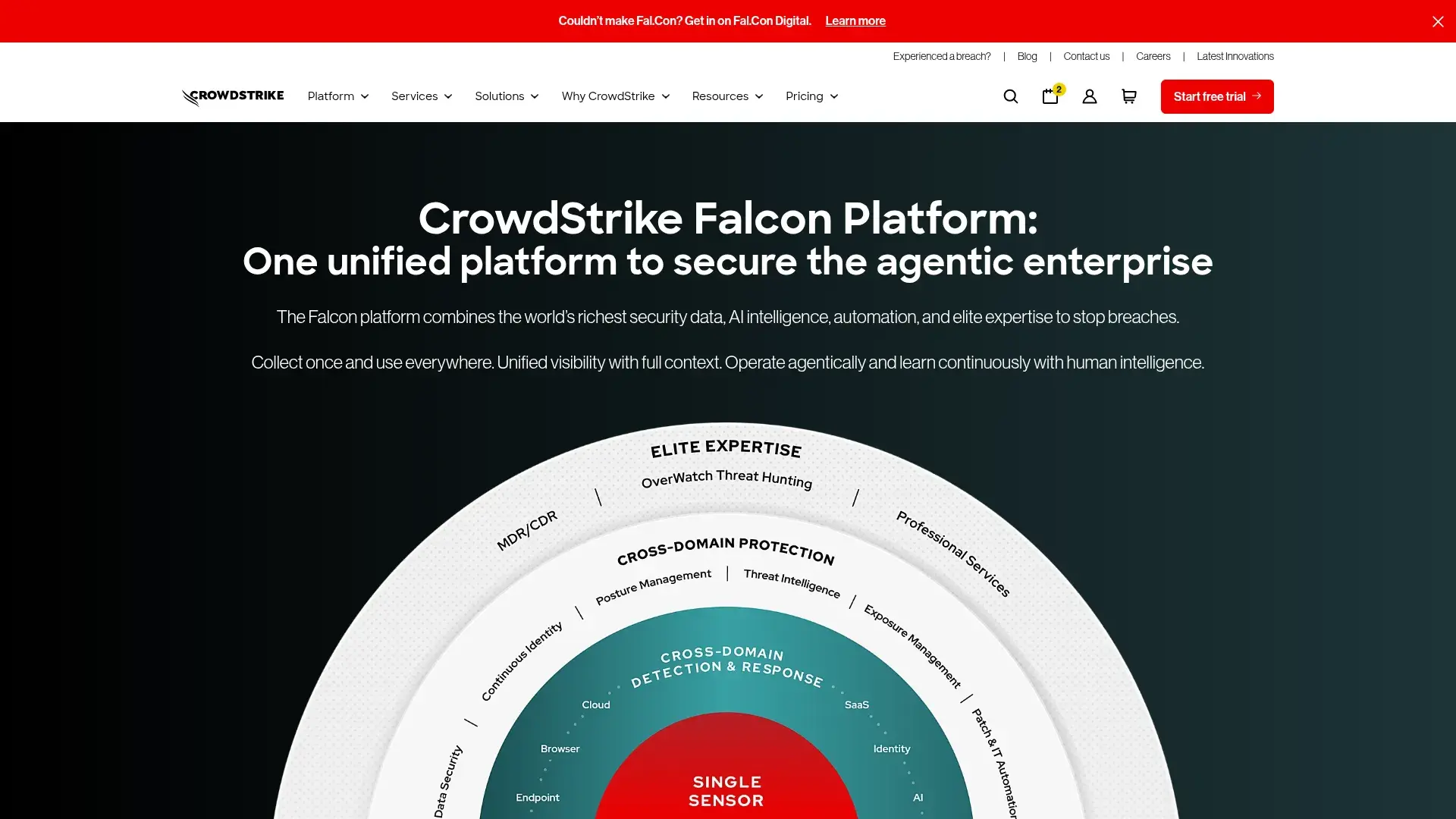
Falcon runs NGAV, EDR, threat intelligence, and managed hunting from one cloud-native sensor. In the 2025 MITRE ATT&CK Enterprise Evaluation, CrowdStrike reported 100% detection and protection with zero false positives (a vendor-reported result). In September 2026, it announced Falcon Guardian for discovering and controlling AI agents on Windows and macOS.
- Best for: Large enterprises that want a single platform with deep threat intelligence and optional managed detection and response (MDR).
- Notable feature: Threat intelligence and managed hunting built into the higher tiers.
- Pricing: List prices run $59.99 to $184.99 per device per year across Falcon Go, Pro, and Enterprise. Go and Pro focus on prevention, and EDR starts with Enterprise, the closest match to SentinelOne Complete. Falcon Complete MDR is quote-only.
Microsoft Defender for Endpoint
Microsoft Defender for Endpoint covers Windows, macOS, Linux, and mobile, and feeds the wider Defender XDR suite. Its biggest advantage is licensing. Plan 1 is included in Microsoft 365 E3, and Plan 2 is included in E5. Plan 1 covers prevention only, so E3 shops get EDR and advanced hunting only after adding Plan 2 or E5 Security.
That tight integration is the main draw. Anas, a SOC analyst, wrote that it "feels worth the cost if you are already using Microsoft tools, since everything is integrated."
- Best for: Organizations on Microsoft 365 E5, or E3 shops willing to add Plan 2 for EDR.
- Notable feature: Native Microsoft ecosystem integration across identity, email, and endpoint.
- Pricing: Included in E3 (P1) and E5 (P2). Standalone P1 and P2 run about $3 and $5.20 per user per month (third-party estimate).
SentinelOne Singularity
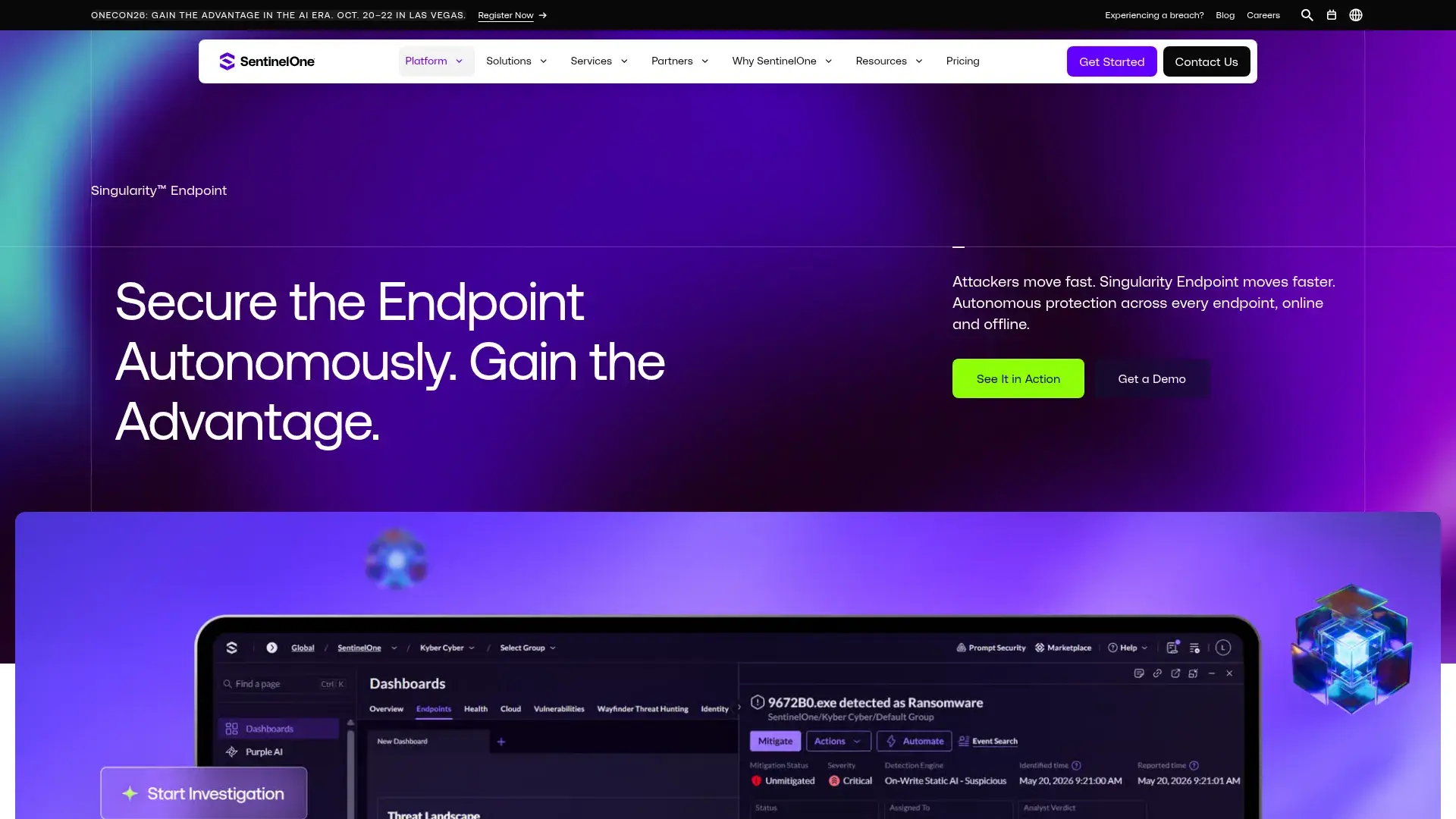
SentinelOne Singularity puts behavioral AI on the agent itself. Detection and response work online or offline, including in air-gapped environments. A built-in generative AI assistant lets analysts search and investigate threats conversationally.
- Best for: Teams that want autonomous, on-device response with little manual triage.
- Notable feature: One-click rollback and remediation.
- Pricing: List prices are $179.99 per endpoint per year for Complete and $229.99 for Commercial. Enterprise is quote-only. Lower Core and Control tiers exist but aren't priced on the public page, and Complete is the first tier with full EDR.
Palo Alto Networks Cortex XDR

Cortex XDR correlates endpoint, network, and cloud data to cut investigation time. It sits inside the wider Cortex family of security operations and automation products. Brauny, an enterprise user, noted that "the console packs a lot in and getting alerts tuned the way you want takes time upfront."
- Best for: SOCs that already run Palo Alto firewalls and want endpoint and network data in one place.
- Notable feature: Cross-domain correlation of endpoint and network telemetry.
- Pricing: Quote-only. Third-party data puts it around $40 to $100 per endpoint per year by tier.
TrendAI Vision One
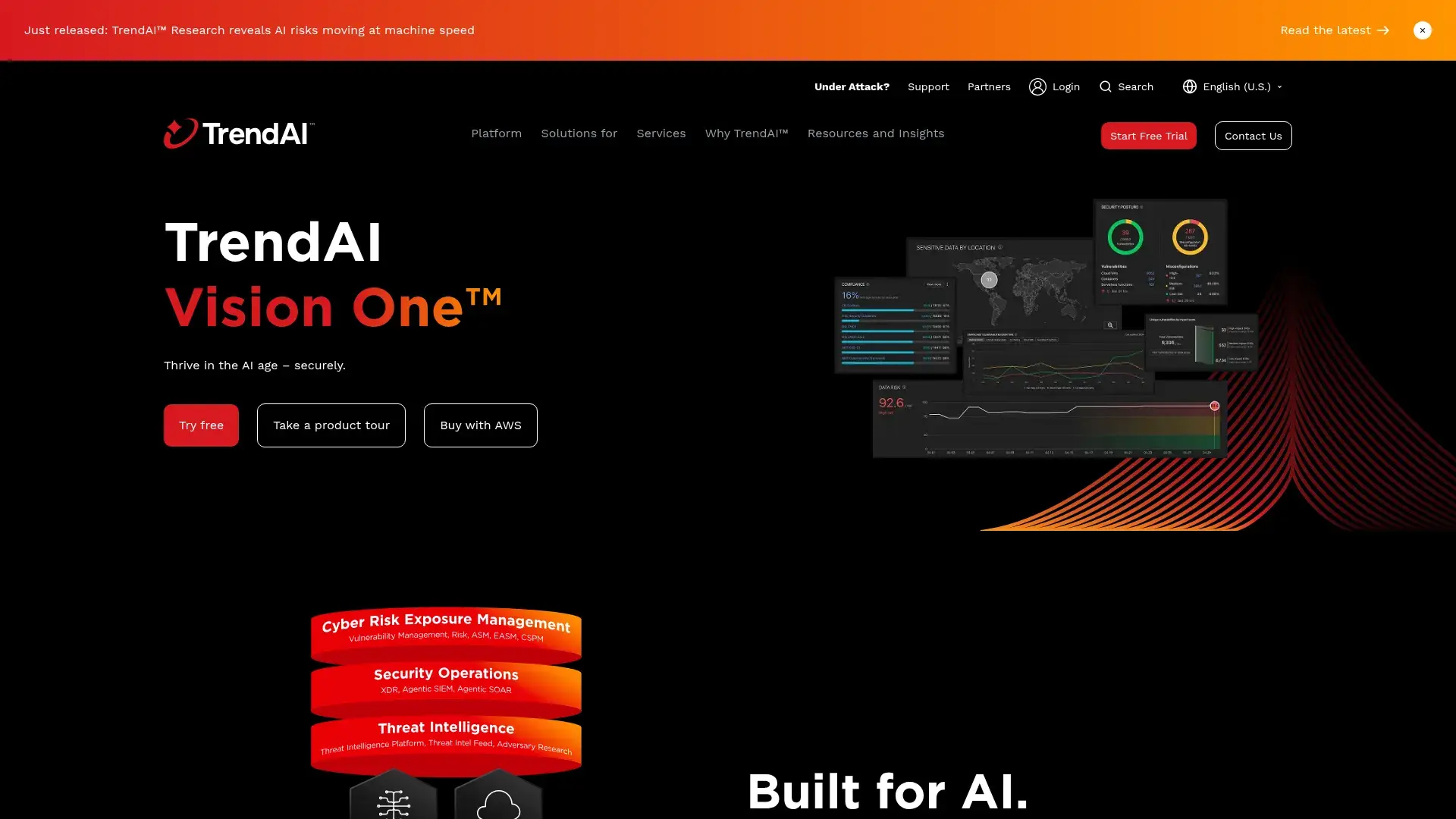
TrendAI Vision One (Trend Micro's enterprise platform, rebranded in March 2026) covers endpoint, email, cloud, identity, network, and data security. Beyond XDR, it adds cyber risk exposure management and an AI Security module. Agentic security information and event management (SIEM) and security orchestration, automation, and response (SOAR) are built in too.
- Best for: Organizations consolidating several security domains onto one platform and one license model.
- Notable feature: Breadth of coverage beyond the endpoint under a single console.
- Pricing: Quote-only. Third-party data shows Vision One bundles at roughly $35 to $60 per endpoint per year.
Sophos Intercept X
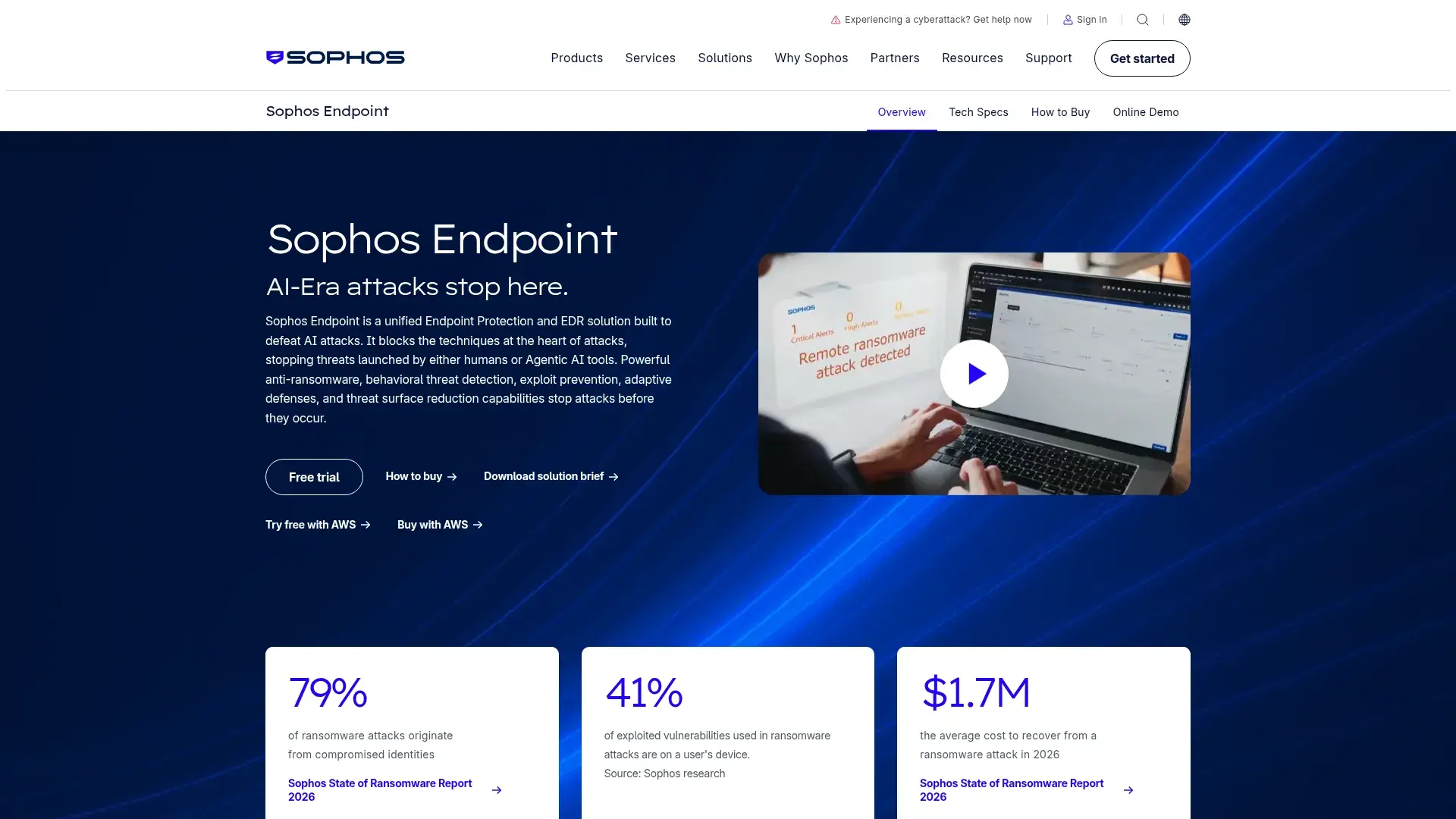
Sophos Intercept X ships with more than 60 exploit mitigations on by default and Adaptive Attack Protection. Its CryptoGuard feature reverts files that ransomware has encrypted. EDR, XDR, and MDR are optional add-ons, and it shares threat data with Sophos firewalls for coordinated response.
- Best for: Mid-market teams, especially those running Sophos firewalls.
- Notable feature: CryptoGuard ransomware file rollback.
- Pricing: Quote-only through partners. Third-party data shows roughly $50 to $70 per user per year for smaller deployments.
Check Point Harmony Endpoint
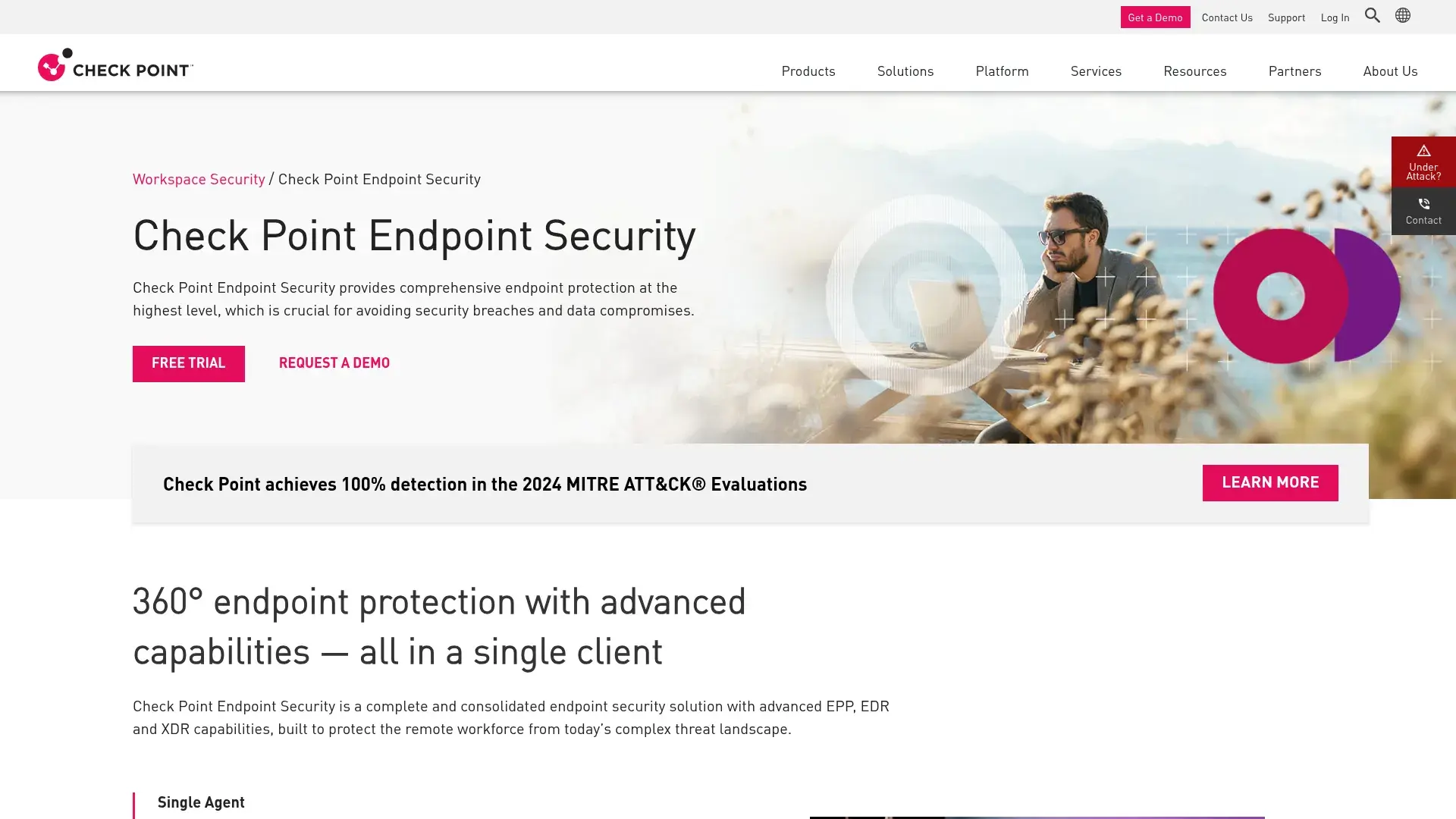
Check Point Harmony Endpoint takes a prevention-first approach and combines EPP, EDR, and XDR in one agent. Its anti-ransomware engine spots illegitimate encryption without signatures and restores files from snapshots. Zero-Phishing blocks new phishing sites and flags reuse of corporate credentials.
- Best for: Prevention-first teams that worry most about phishing and credential theft.
- Notable feature: Zero-Phishing browser protection with credential reuse detection.
- Pricing: Quote-only. Third-party data puts Essentials at about $40 to $80 per seat per year.
Bitdefender GravityZone
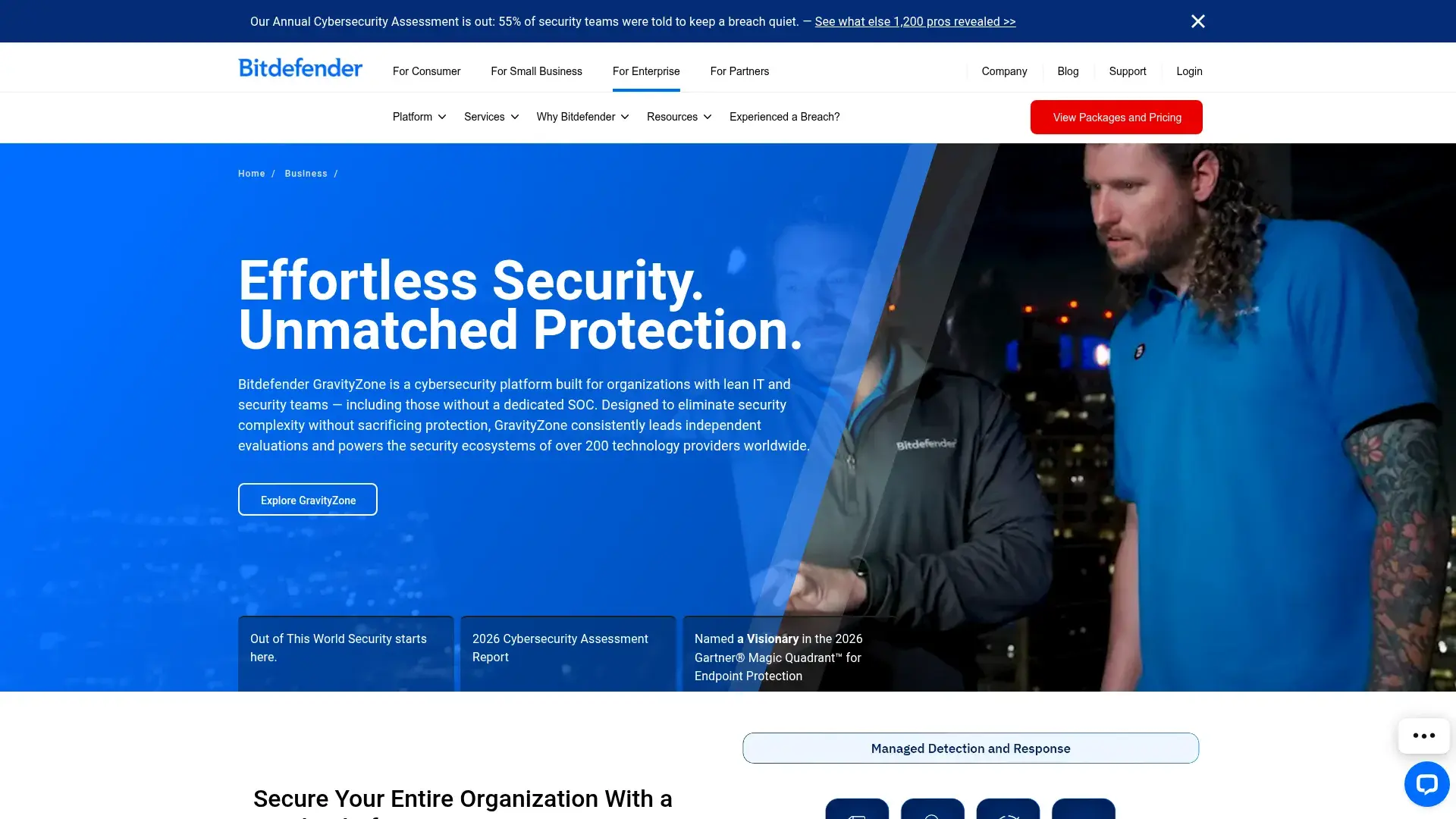
Bitdefender GravityZone unifies EPP, EDR, and XDR in one console. Management runs in the cloud or on-prem.
Bitdefender pitches it at organizations with lean IT and security teams. Its PHASR feature focuses on shrinking the attack surface.
- Best for: Lean IT teams that want strong prevention at a moderate per-device cost.
- Notable feature: PHASR adaptive attack surface reduction.
- Pricing: Third-party estimates run from about $57 to $96 per device per year by tier. Renewals are reported to cost more than first-year pricing.
Carbon Black (Broadcom)
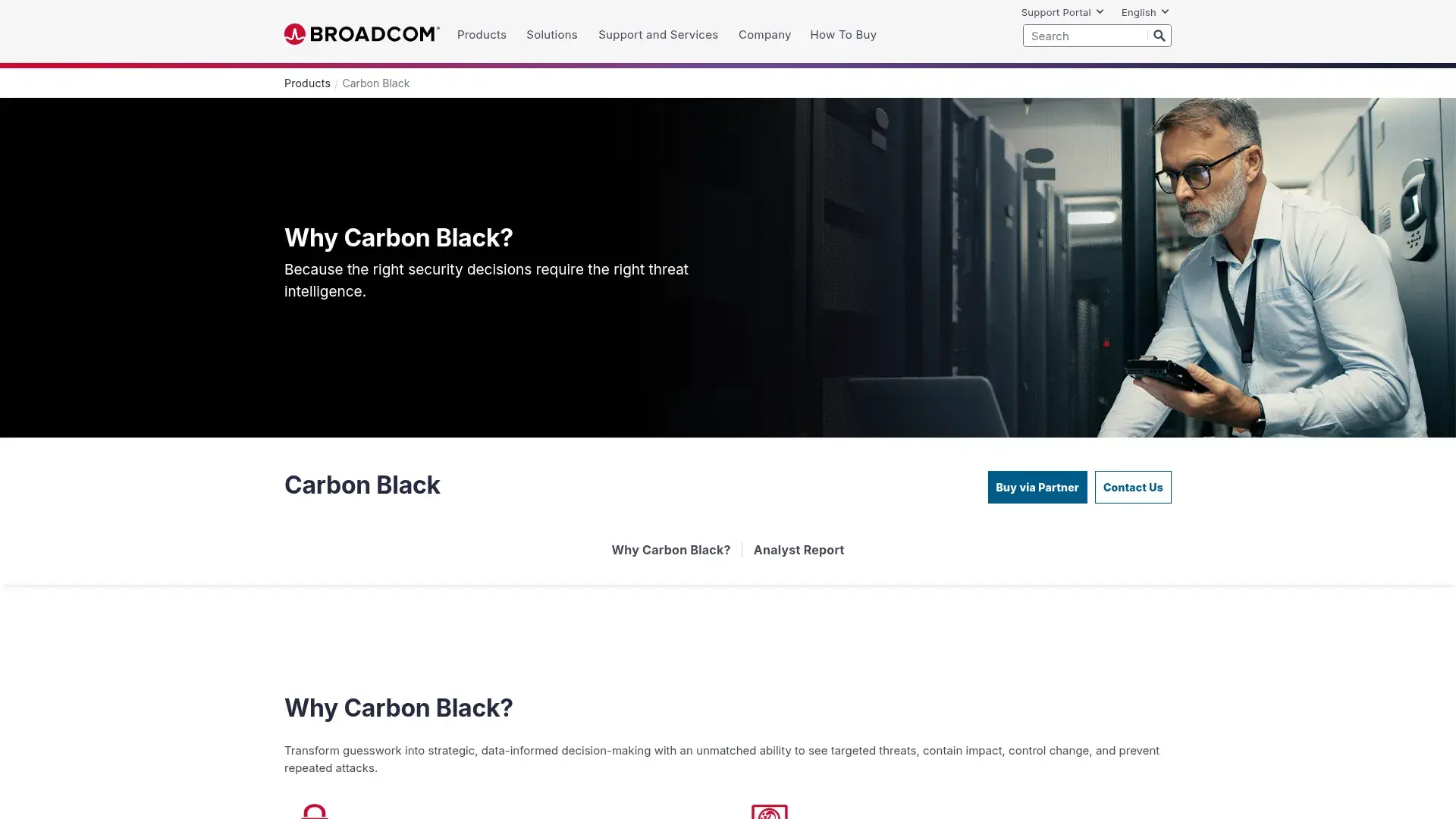
Carbon Black now sits under Broadcom. Carbon Black EDR continuously records endpoint activity and supports on-prem deployment for SOC threat hunting. In March 2026, Broadcom announced Symantec CBX to unify Symantec prevention with Carbon Black EDR in one cloud XDR platform.
Broadcom's post-acquisition licensing changes, including Symantec bundling and higher renewal quotes, have led many Carbon Black customers to price alternatives at renewal.
- Best for: Mature SOCs that hunt threats in raw endpoint data and may need on-prem deployment.
- Notable feature: Continuous recording of endpoint activity for investigation.
- Pricing: Quote-only.
Trellix Endpoint Security
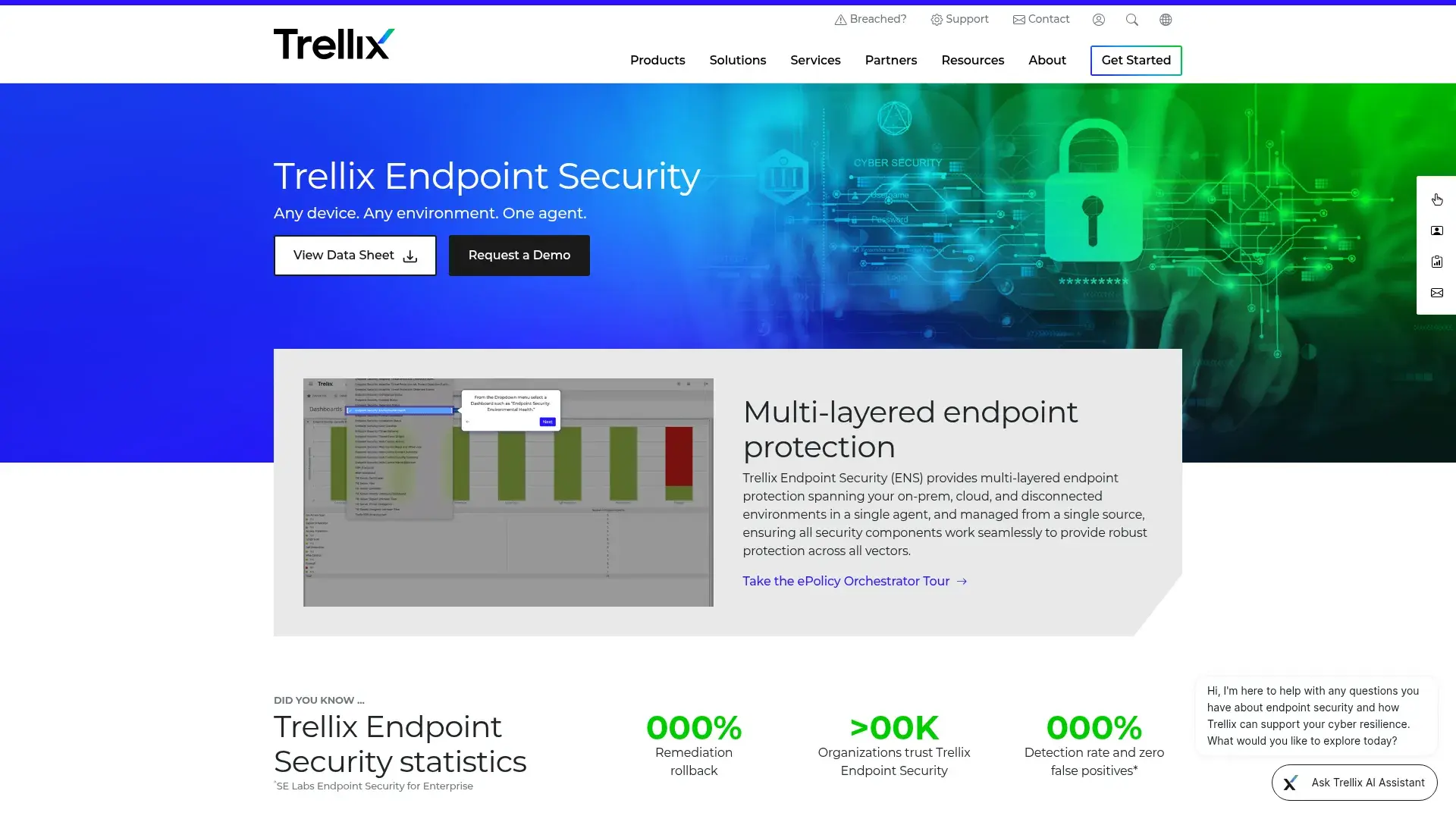
Trellix formed in 2022 from McAfee Enterprise and FireEye. Its endpoint suite layers prevention, EDR, and forensics, all managed from a single policy console familiar to longtime McAfee admins.
- Best for: Organizations with existing McAfee or FireEye investments.
- Notable feature: Centralized policy management for large, mixed device fleets.
- Pricing: Quote-only.
Cisco Secure Endpoint
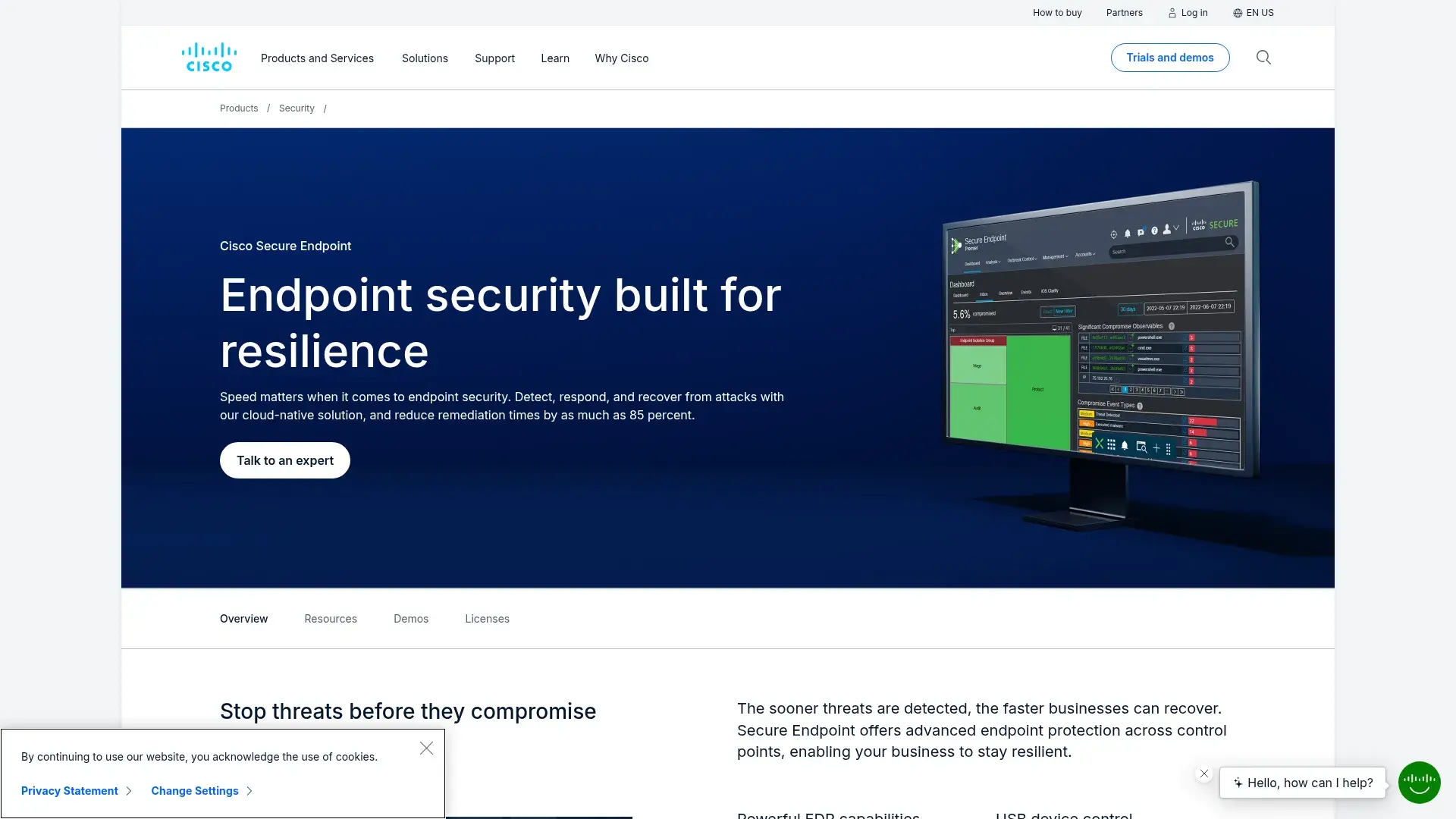
Cisco Secure Endpoint is powered by Cisco Talos threat intelligence. It comes in three tiers, from Essentials with one-click host isolation to Premier with Talos-led threat hunting. Siham, a network admin, flagged high resource usage that can slow other applications.
- Best for: Cisco security customers who want endpoint data flowing into Cisco XDR.
- Notable feature: Talos threat intelligence plus Orbital live query for forensics.
- Pricing: Quote-only.
Acronis Cyber Protect Cloud
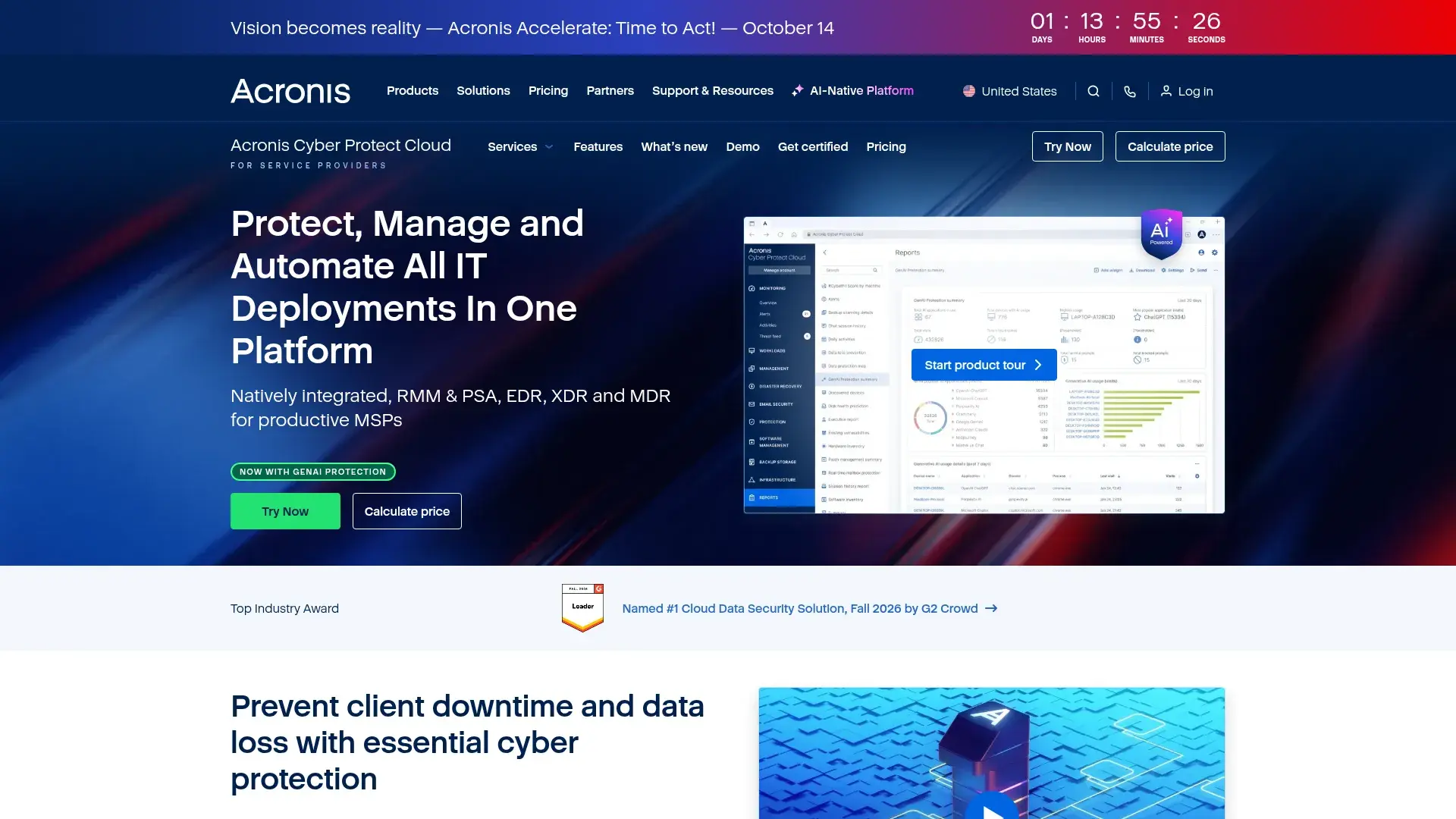
Acronis Cyber Protect Cloud natively combines backup, disaster recovery, RMM, professional services automation (PSA), and security for MSPs. Its endpoint packages include EDR and XDR, while MDR is billed separately. Pairing detection with backup means a compromised machine can be restored from the same console.
- Best for: MSPs that want backup, device management, and endpoint security in one product.
- Notable feature: Built-in backup and recovery alongside EDR.
- Pricing: Priced per workload or per gigabyte (GB) through service providers. No public list prices.
How To Evaluate And Choose An Endpoint Security Tool
The list above narrows the field. These factors help you choose the right tool.
Deployment model
Most platforms are cloud-native. They pair a lightweight agent with a SaaS console.
Regulated or air-gapped environments may need an on-prem or self-hosted option. Trellix (with on-prem ePO), Carbon Black EDR, Bitdefender, and Check Point offer on-prem management, and Trellix is a common pick in regulated and federal environments. SentinelOne also supports air-gapped environments.
Ent supports customer-controlled deployment in your own cloud, so telemetry stays in your environment. Ask about fully on-prem or air-gapped options if you need them.
OS and device coverage
List every OS in your fleet, including servers, virtual desktops, and Linux build machines. Check that the specific features you need work on each one. Agent-level features often launch on Windows first.
Integration with your stack
Your endpoint tool should feed your SIEM and SOAR and use your identity provider for context. Ask for native integrations. A generic API alone usually means more custom work.
Microsoft, Palo Alto, and Cisco shops will find the tightest fit within their own ecosystems.
Performance and resource impact
Agent overhead matters to users. Run a pilot on your oldest supported hardware and on developer machines with heavy build workloads.
AI and ML detection vs. rule-based detection
Machine learning catches new and fileless behavior that rules miss. Rules are predictable and easy to audit. The strongest tools use both, so ask vendors how they tune each and how you can tune them yourself.
Reporting and compliance
Check that reports map to the frameworks you answer to. For example, HIPAA requires procedures for guarding against malicious software, and auditors will want evidence.
Scalability and total cost of ownership
List price is often only part of the bill. Add-on modules, data retention, MDR, renewal increases, and analyst time all add up. Model three years of cost at your expected device count.
Coverage for AI agents and intent
This gap is easy to miss. Nearly every tool above is strong at device-level prevention. Few were built to understand whether an action by a person or an AI agent makes sense at the moment it happens.
Ent was built for that layer. It complements your existing EDR or XDR, connecting human and AI-agent activity into one sequence and interpreting the intent behind it. It can then control execution and stop risky activity before it becomes an incident.
Ent can also replace endpoint-based insider risk, DLP, and application control tools, and reduce the need for separate UEBA on endpoint activity. All of them run on the same context and enforcement layer.
Ent is built to protect work as it happens. If AI coding agents are already in your environment, book a demo with Ent to see it on your own endpoints.
FAQs
What's the difference between EDR and antivirus?
Antivirus prevents known malware from running, mostly by matching signatures or behavior. EDR assumes something will get through. It records endpoint activity, detects suspicious behavior, and gives analysts tools to investigate and contain threats.
Do I need endpoint security if I already have a firewall?
A firewall controls traffic at the network edge, but laptops leave the office and connect from anywhere. CrowdStrike reports that 82% of its 2025 detections were malware-free. Catching that activity takes behavioral monitoring on the device itself, and a firewall can't provide it.
How much does endpoint security cost?
Published list prices range widely. Microsoft Defender for Business is $3 per user per month. CrowdStrike's first bundle with EDR, Falcon Enterprise, lists at $184.99 per device per year. SentinelOne's Complete tier, its first with full EDR, lists at $179.99 per endpoint per year.
Many vendors are quote-only, so budget for add-ons like MDR and longer data retention.
Can endpoint security tools detect AI agent activity?
Most see AI tools as ordinary trusted processes. A few vendors have started adding agent discovery and runtime controls.
Ent goes beyond agent security alone, because people and agents use the same applications, data, and credentials. It applies one control model to both and stops risky activity before it becomes an incident.