15 Cyberhaven Alternatives For DLP And Insider Risk

Cyberhaven built its name on data lineage, helping popularize the category now known as data detection and response (DDR). By tracing where data originates, how it changes, and where it moves, the company showed that security policies should follow the actual content and information rather than just the file.
In February 2026, Cyberhaven expanded its footprint and launched a unified AI and data security platform that covers data security posture management (DSPM), data loss prevention (DLP), insider risk management (IRM), and AI security.
It's a capable, well-reviewed product. But if you’re actively hunting for a Cyberhaven alternative, your team has likely hit a specific operational or architectural snag. Some organizations need email and SaaS coverage from a single suite. Others want inline blocking at the network edge, deeper user investigations, or controls built for AI agents running on developer laptops.
Those needs point to very different tools, from enterprise DLP suites and secure access service edge (SASE) platforms to insider risk tools and AI endpoint security. Below you'll find a comparison table, alternatives, and a scenario guide on when to choose each.
TL;DR
- Pick an alternative by the part of Cyberhaven's job you need done differently: channel coverage, inline enforcement, investigations, or AI agent control.
- Microsoft Purview fits Microsoft 365 shops, Netskope and Zscaler fit teams already on SASE, and Forcepoint, Symantec, Fortra, and Trellix fit large regulated DLP programs.
- Mimecast Incydr, DTEX, Proofpoint, and Teramind lead on insider risk investigations. Nightfall covers SaaS and GenAI apps through APIs.
- Ent fits teams whose developers run AI coding tools and agents on endpoints. It pairs with email or SaaS DLP for other channels.
Why Teams Look For Cyberhaven Alternatives
Cyberhaven tracks data from its origin and follows it through copies, edits, renames, and pastes into AI tools across endpoints, browsers, and cloud apps. That history shows analysts how an incident unfolded, and lets policies key on where data came from as well as what it contains. Users rate it 4.5 out of 5 on both Gartner Peer Insights (47 ratings) and G2 (19 reviews), as of November 2026.
It's a weaker fit when you need:
- Deep policy customization
- Inline blocking on specific actions
- Published pricing
Those gaps tend to show up after rollout, once the tool meets your own policies and users.
Policy work is the most common sore spot. On SoftwareReviews, one reviewer at an engineering company wrote that "the policy customization options can feel limited for more complex use cases." Other users on the same page describe extra tuning early on to avoid alert fatigue, plus a learning curve in the console.
Commercial and architectural factors are important too:
- Pricing is quote-only. Cyberhaven doesn't publish pricing or list a free trial, so budgeting starts with a sales call.
- Lineage is strongest at investigation. A lineage-first model excels at showing how data flowed. Teams that mainly want inline enforcement on specific actions may find it lighter than a classic DLP suite.
- Browser extensions face more scrutiny. In December 2024, attackers phished a Chrome Web Store admin account and pushed a malicious Cyberhaven extension update, part of a broader campaign that hit other Chrome extensions too. Cyberhaven removed it within about an hour of detection. It's a good reminder to ask every vendor, Ent included, how it signs and controls extension updates.
Currently, AI represents the biggest shift in DLP and IRM. Coding assistants and autonomous agents now act on endpoints with a user's credentials.
These tools read files, execute scripts, and call APIs in rapid order, and look like routine developer activity. Teams increasingly want controls built around real-time evaluation of what an actor does in sequence, beyond where data travels.
The 15 Best Cyberhaven Alternatives
Before diving into the individual tools, use the table below to compare each alternative against Cyberhaven (sitting in the first row for reference). This gives you a quick view of coverage surfaces, deployment models, pricing, and important features.
Cyberhaven alternatives at a glance
| Tool | Category | Primary coverage | Best for | Notable feature | Deployment | Pricing model |
|---|---|---|---|---|---|---|
| Cyberhaven | Unified data security | Endpoint, browser, email, SaaS, cloud | Lineage-based investigations | Data lineage across copies and rewrites | SaaS | Quote-only |
| Ent | AI endpoint security | Endpoint, browser | AI coding tools and agents on endpoints | One control model for people and agents | SaaS or customer-controlled | Quote-only |
| Microsoft Purview | Enterprise DLP and insider risk | Endpoint, browser, email, SaaS | Microsoft 365 shops | Adaptive Protection | Microsoft 365 cloud | M365 E5, or $12/user/mo add-on to E3 |
| Forcepoint DLP | Enterprise DLP suite | Endpoint, email, web, SaaS, network | Compliance-driven programs | Risk-Adaptive Protection | On-prem, cloud, or hybrid | Quote-only |
| Symantec DLP | Enterprise DLP suite | Endpoint, network, email, storage, SaaS | Regulated enterprises | EDM, IDM, VML, and OCR in one engine | On-prem, appliance, or cloud | Quote-only |
| Fortra DLP | Enterprise DLP suite | Endpoint, network, email, SaaS | IP protection on mixed-OS fleets | Managed service option | SaaS, managed, or on-prem | Quote-only |
| Trellix DLP | Enterprise DLP suite | Endpoint, network, email, web | On-prem regulated and federal shops | GenAI upload blocking under ePO | On-prem (ePO) or SaaS | Quote-only, per endpoint |
| Proofpoint | Enterprise DLP and insider risk | Email, endpoint, SaaS | Proofpoint email customers | ITM incident timeline | Cloud plus endpoint agent | Quote-only |
| Netskope One DLP | Cloud and SASE DLP | Network, SaaS, email, endpoint | Netskope SWG or CASB customers | Prompt redaction across 1,800+ AI apps | Cloud | Quote-only |
| Zscaler Data Protection | Cloud and SASE DLP | Network, email, SaaS, IaaS, endpoint | Zscaler Internet Access customers | Inline LLM classification | Cloud | Quote-only add-on |
| CrowdStrike Falcon Data Security | Endpoint DLP | Endpoint, browser, SaaS | Falcon customers | Runs on the existing Falcon sensor | Cloud plus Falcon sensor | Quote-only add-on |
| Mimecast Incydr | Insider risk management | Endpoint, browser, email, cloud | Departing-employee risk | Responses scaled to risk | SaaS | Quote-only |
| DTEX | Insider risk management | Endpoint | Formal insider risk programs | Pseudonymized behavioral telemetry | SaaS | Quote-only |
| Teramind | User activity monitoring and DLP | Endpoint | HR and legal investigations | Screen recordings with OCR | Cloud, on-prem, or private cloud | From $14/seat/mo; DLP tier $32 |
| Nightfall AI | API-based SaaS and GenAI DLP | SaaS, browser, endpoint, email | SaaS-heavy companies | Inference Hooks in live AI sessions | SaaS, plus agent and extension | Per user/year, quote-only |
| Netwrix Endpoint Protector | Endpoint DLP and device control | Endpoint | Mixed-OS USB control | Device control across Windows, macOS, and Linux | Virtual appliance, cloud, or SaaS | Quote-only |
Coverage reflects what each named product delivers on its own. Some vendors spread capabilities across separate products. For example, Microsoft's AI governance sits in Purview and Defender for Cloud Apps, and Proofpoint's DSPM comes in its Data Security Complete bundle.
1. Ent
Ent is AI endpoint security for human and agentic work. Its lightweight agent runs on Windows, macOS, and Linux, and browser extensions extend it to web apps. Together, they link user activity, agent actions, applications, data, and process execution into one sequence.
Deterministic policy, behavioral intelligence, and local AI reasoning then answer what is happening, why, and whether it should continue. Responses range from a warning or a justification prompt to constraining, escalating, or blocking the action. A custom on-device small language model classifies sensitive data where it's used.
Ent also provides live visibility into OpenAI Codex, Claude Code, Claude Cowork, GitHub Copilot, and Cursor. Application control covers shadow AI, weaponized remote management tools, living-off-the-land binaries (LOLBins), and vulnerable drivers. Ent emerged from stealth in June 2026 with a $100M seed round led by Decibel.
Ent can replace endpoint-based insider risk and DLP tools, and it complements an existing endpoint detection and response (EDR) or extended detection and response (XDR).
How it differs from Cyberhaven: Both cover AI tools and agents. Cyberhaven follows data lineage, while Ent reads the actor's actions in sequence and interprets the intent behind them.
Best for: Security teams whose developers and knowledge workers run AI coding tools and agents on their endpoints.
Notable feature: One control model for people and AI agents. Both use the same apps, data, and credentials.
Limitation: Ent is a new company with no public pricing and no third-party user ratings yet. It's endpoint-scoped, so it doesn't cover email or SaaS API DLP.
Pricing: Not publicly listed.
2. Microsoft Purview
Microsoft Purview bundles DLP and Insider Risk Management into the Microsoft 365 tenant. DLP covers Exchange, SharePoint, OneDrive, Teams, Windows and macOS endpoints, on-prem file shares, and Microsoft 365 Copilot. Through Edge for Business and SASE integrations, it can also stop oversharing to ChatGPT, Gemini, and DeepSeek.
How it differs from Cyberhaven: Purview inspects content against sensitive information types and labels, while Cyberhaven follows lineage across apps.
Best for: Organizations standardized on Microsoft 365 that already own or plan to buy E5-level licensing.
Notable feature: Adaptive Protection assigns stricter DLP and Conditional Access policies to users as their insider risk level rises.
Limitation: Out-of-the-box detection can be noisy, and investigations take a lot of clicking through the console. Coverage is strongest inside the Microsoft ecosystem.
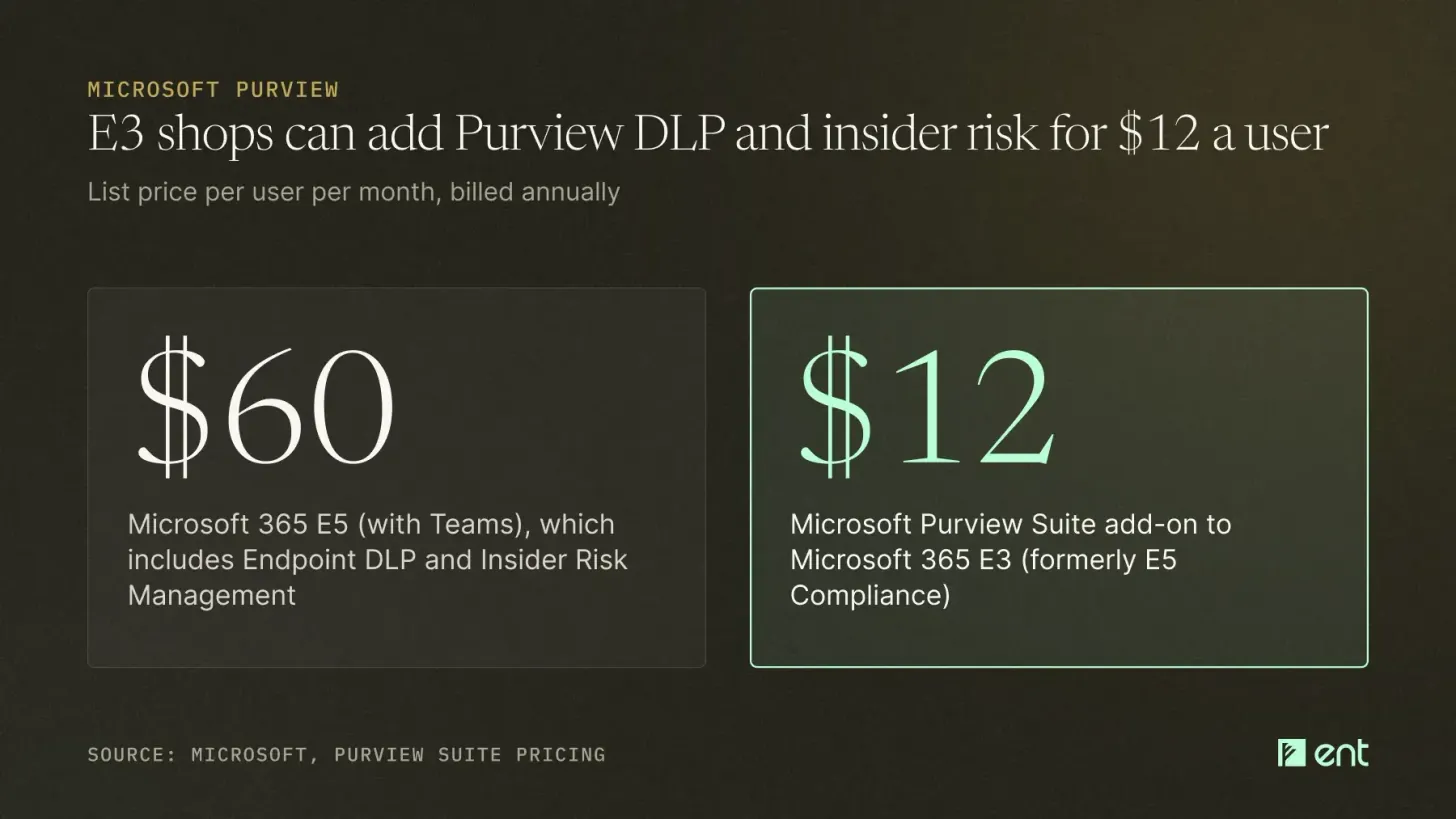
Pricing: Endpoint DLP and Insider Risk Management come with Microsoft 365 E5 ($60 per user per month with Teams). You can also add them to Microsoft 365 E3 with the Microsoft Purview Suite add-on (formerly E5 Compliance) at $12 per user per month. Some insider risk indicators bill pay-as-you-go.
3. Forcepoint DLP
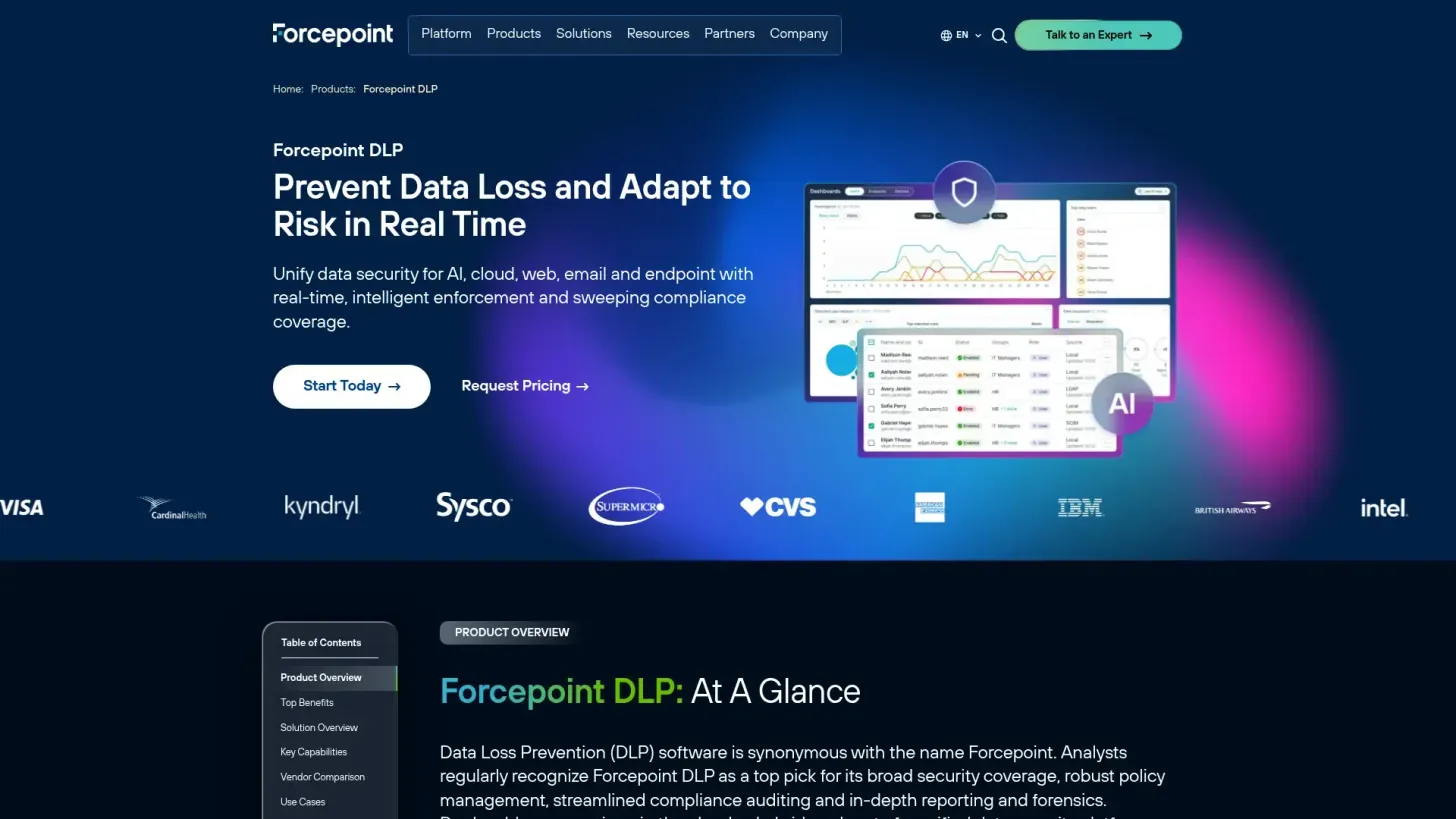
Forcepoint DLP applies one set of policies across endpoint, email, web, cloud apps, network, and GenAI tools. It ships with 2,000+ classifiers and policy templates, plus database fingerprinting for exact-match detection. Its 2025 acquisition of Getvisibility added AI-based discovery and classification.
How it differs from Cyberhaven: Forcepoint relies on content classification and fingerprinting, then adjusts enforcement based on user risk.
Best for: Large, compliance-driven DLP programs that need every major channel and on-prem or hybrid deployment.
Notable feature: Risk-Adaptive Protection scores users on 150+ behavior indicators and tightens enforcement automatically for risky users.
Limitation: Initial setup and policy configuration take significant time, and the endpoint agent adds overhead.
Pricing: Not publicly listed.
4. Symantec DLP
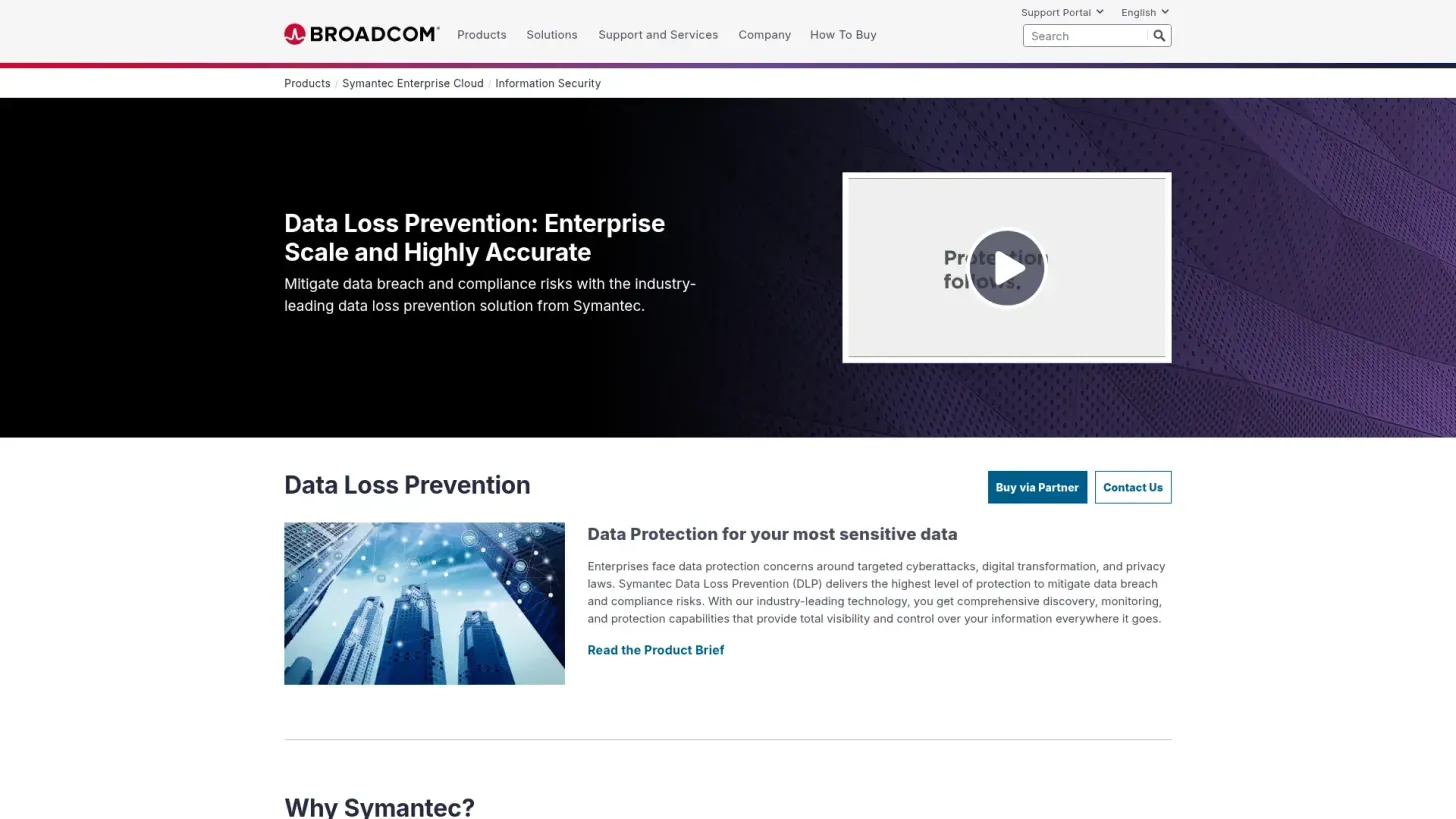
Symantec DLP, now part of Broadcom, is sold as DLP Core (endpoint, network, storage) and DLP Cloud. Detection combines exact data matching, indexed document matching, vector machine learning for IP like source code, and optical character recognition (OCR) for images. Release 25.1 added browser integration to monitor activity in popular GenAI web apps.
How it differs from Cyberhaven: Symantec decides what's sensitive through deep content detection across many channels. Cyberhaven leans on lineage context instead.
Best for: Large regulated enterprises that need on-prem or hybrid DLP with mature detection.
Notable feature: Exact data matching, indexed document matching, vector machine learning, and OCR all run in one policy engine.
Limitation: Deployment and policy tuning are complex. Modules are also licensed separately, so total cost climbs as you add channels.
Pricing: Not publicly listed.
5. Fortra DLP (formerly Digital Guardian)
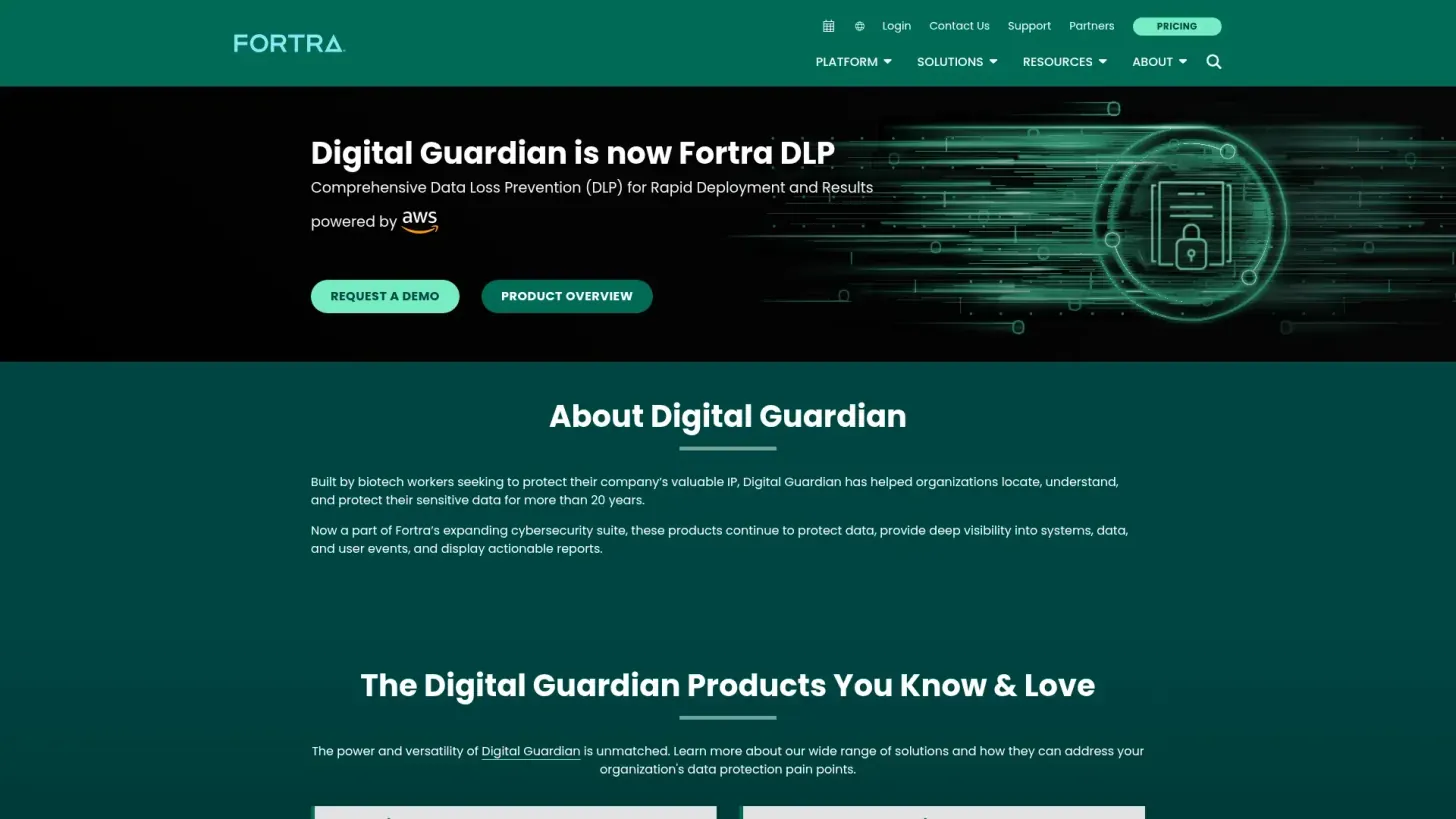
Fortra DLP, formerly Digital Guardian, uses an endpoint agent that captures data events at the source on Windows, macOS, and Linux. Packages add network, email, and SaaS coverage, and Fortra's 2025 purchase of Lookout's cloud security business brought cloud access security broker (CASB) and secure web gateway tools. The Advanced package adds exact data matching and OCR.
How it differs from Cyberhaven: Fortra classifies and controls data at the endpoint with content rules and doesn't trace lineage.
Best for: Teams protecting IP on mixed-OS fleets that want the option of a managed service.
Notable feature: Fortra analysts can run the program for you as a managed service.
Limitation: Dashboards can be slow, and the Advanced and Elite packages require support at 15% of net cost plus an onboarding package.
Pricing: Not publicly listed. Vendr estimates $40 to $80 per endpoint a year. Typical minimum contracts run $30,000 to $50,000.
6. Trellix DLP
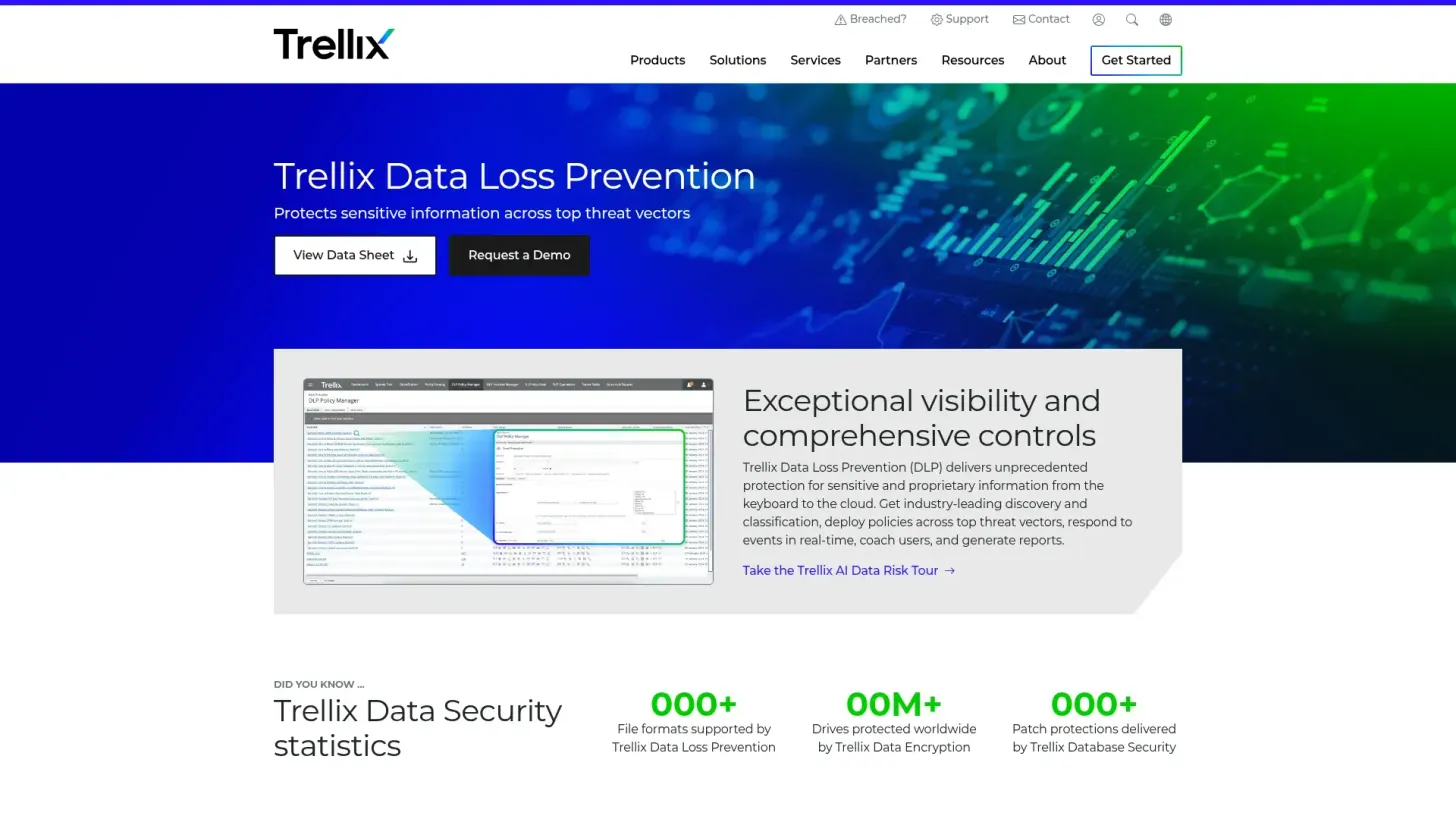
Trellix DLP is the former McAfee DLP, managed through ePolicy Orchestrator (ePO) on-prem or as SaaS. It covers endpoints, removable media, data at rest, and network, email, and web gateways. Recent updates added endpoint OCR, text-upload blocking for GenAI prompts, and an AI Data Risk Dashboard for shadow AI use.
How it differs from Cyberhaven: Trellix enforces content rules from one endpoint agent and console and doesn't track lineage.
Best for: Regulated and federal shops that need on-prem DLP and already run ePO.
Notable feature: Device control, endpoint OCR, and GenAI text-upload blocking in one agent under ePO.
Limitation: Configuration is complex, and it has no dedicated insider risk analytics module.
Pricing: Not publicly listed. It's sold per endpoint on annual subscriptions.
7. Proofpoint
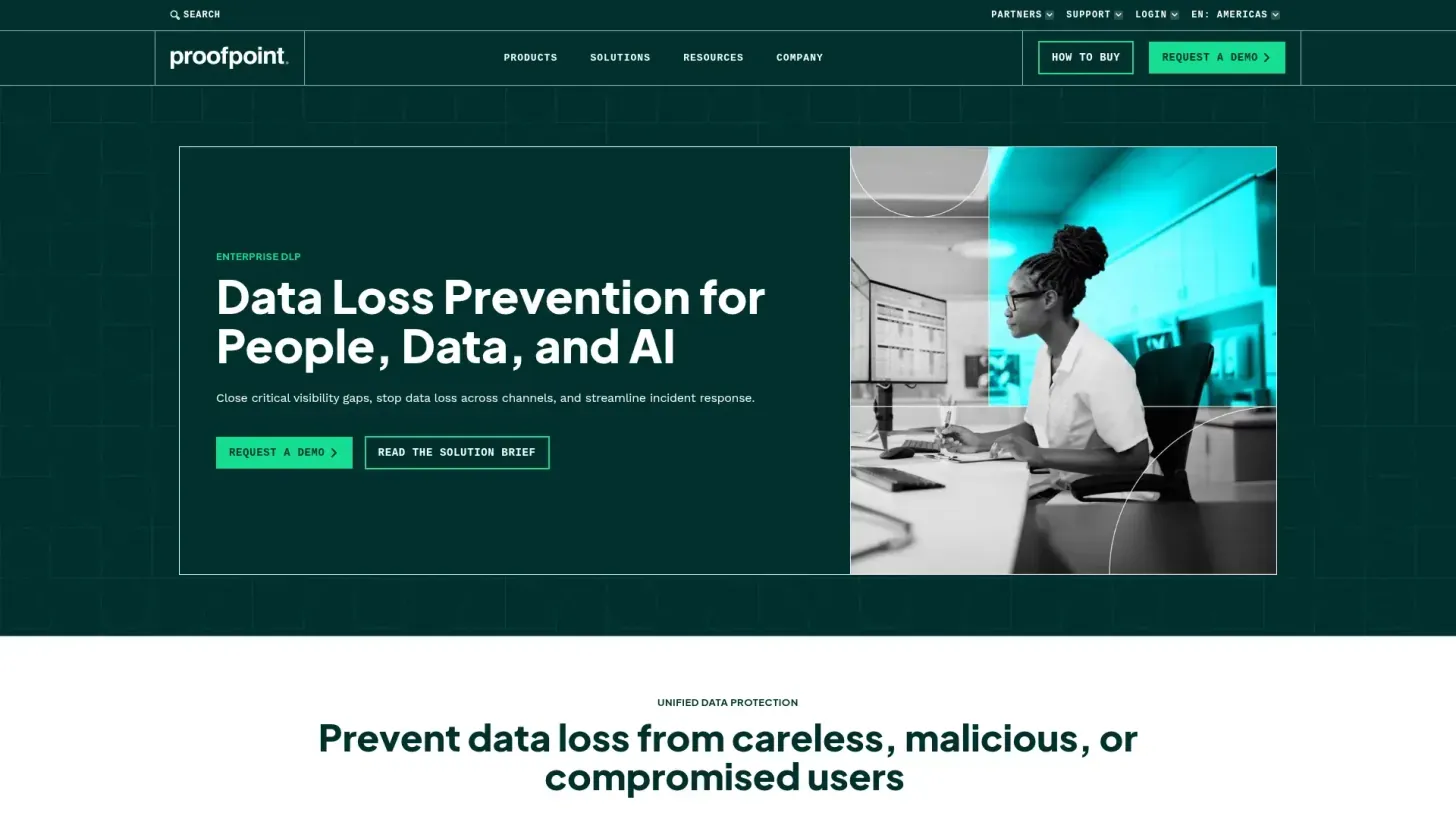
Proofpoint pairs Enterprise DLP with Insider Threat Management (ITM), and sells both with DSPM as Data Security Complete. Enterprise DLP covers email, cloud apps, endpoints, and GenAI tools. ITM captures screenshots and activity context before, during, and after an incident.
How it differs from Cyberhaven: Proofpoint inspects content with an email-first heritage. For investigations, it shows a visual activity timeline instead of a reconstructed data flow.
Best for: Organizations already using Proofpoint for email security that want DLP and insider risk on the same platform.
Notable feature: ITM's incident timeline, which anonymizes and masks user data to protect employee privacy.
Limitation: It's strongest where Proofpoint already handles your mail. Its shared DLP and ITM endpoint agent runs in user mode. That keeps it light, but it's easier to tamper with than a kernel-level agent.
Pricing: Not publicly listed.
8. Netskope One DLP
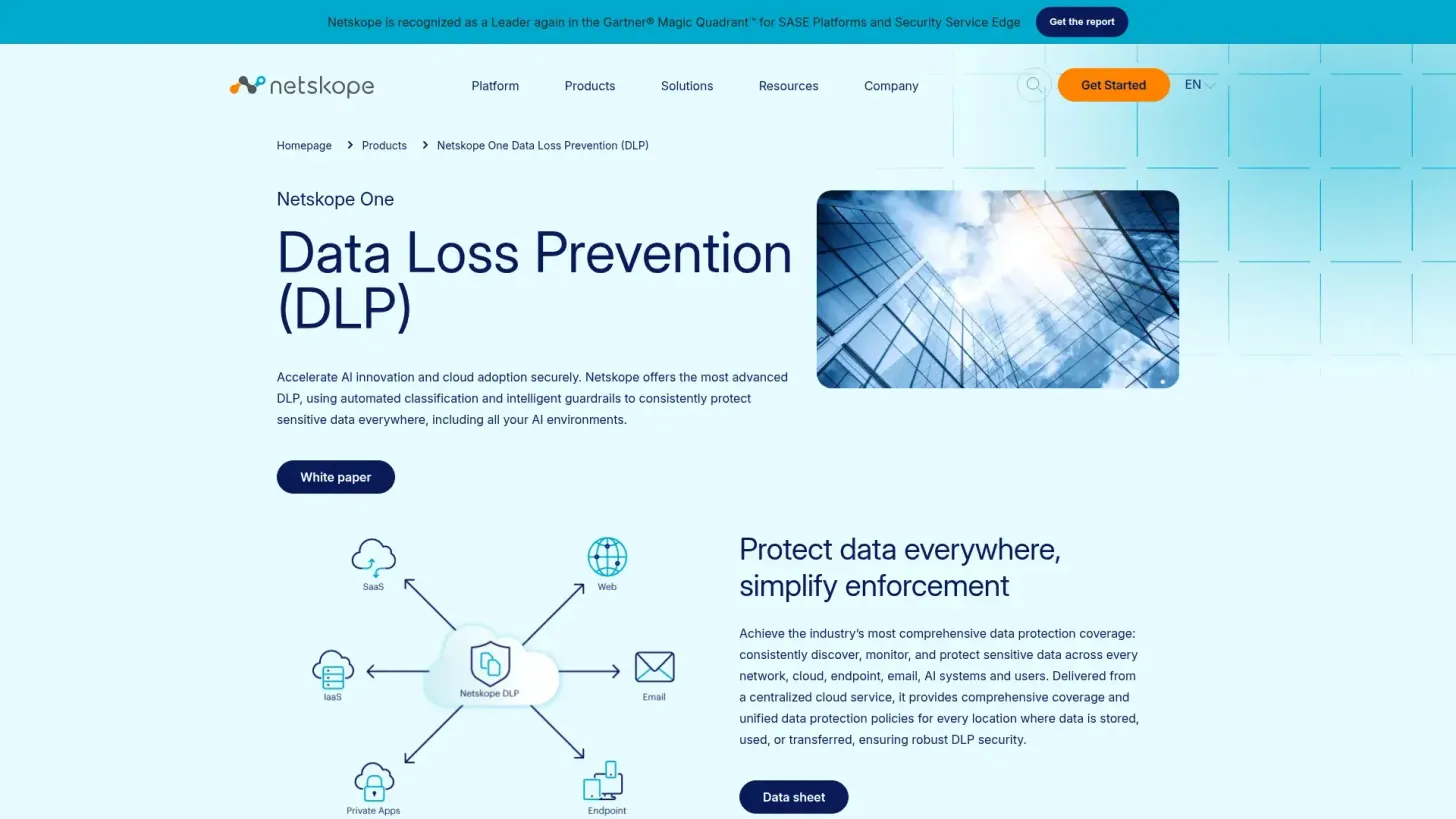
Netskope One DLP runs from Netskope's cloud and applies one policy framework across web, SaaS, email, endpoints, and AI environments. Traffic reaches it through the Netskope client, a forward proxy, or API connections to managed cloud apps. Endpoint DLP is an add-on to the same client for USB and printer control.
How it differs from Cyberhaven: Netskope inspects traffic inline at the network edge and through SaaS APIs, while Cyberhaven tracks data lineage from the endpoint.
Best for: Teams that already run Netskope for secure web gateway or CASB.
Notable feature: Inline inspection across 1,800+ AI apps that redacts the sensitive part of a prompt, lets the task through, and coaches the user in real time.
Limitation: Setup takes work, and expect false positives until policies are tuned.
Pricing: Not publicly listed.
9. Zscaler Data Protection
Zscaler, which now markets this line as Zscaler Data Security, runs DLP on its Zero Trust Exchange proxy. It covers web, GenAI, email, SaaS, IaaS, and endpoints with one policy. Classification adds OCR and LLM-based models that read content without keyword rules.
How it differs from Cyberhaven: Zscaler inspects content inline in the proxy path, while Cyberhaven follows lineage from the endpoint.
Best for: Organizations already routing traffic through Zscaler Internet Access.
Notable feature: LLM classification on the same proxy that inspects all web and GenAI traffic, plus browser isolation for risky AI apps.
Limitation: Inline DLP only sees traffic steered through Zscaler. Local actions such as file copies, agent file reads, and command-line tools that bypass the proxy or pin certificates stay out of view. Its endpoint DLP focuses on removable storage, network shares, and printing.
Pricing: Not publicly listed. DLP is sold as an add-on module.
10. CrowdStrike Falcon Data Security
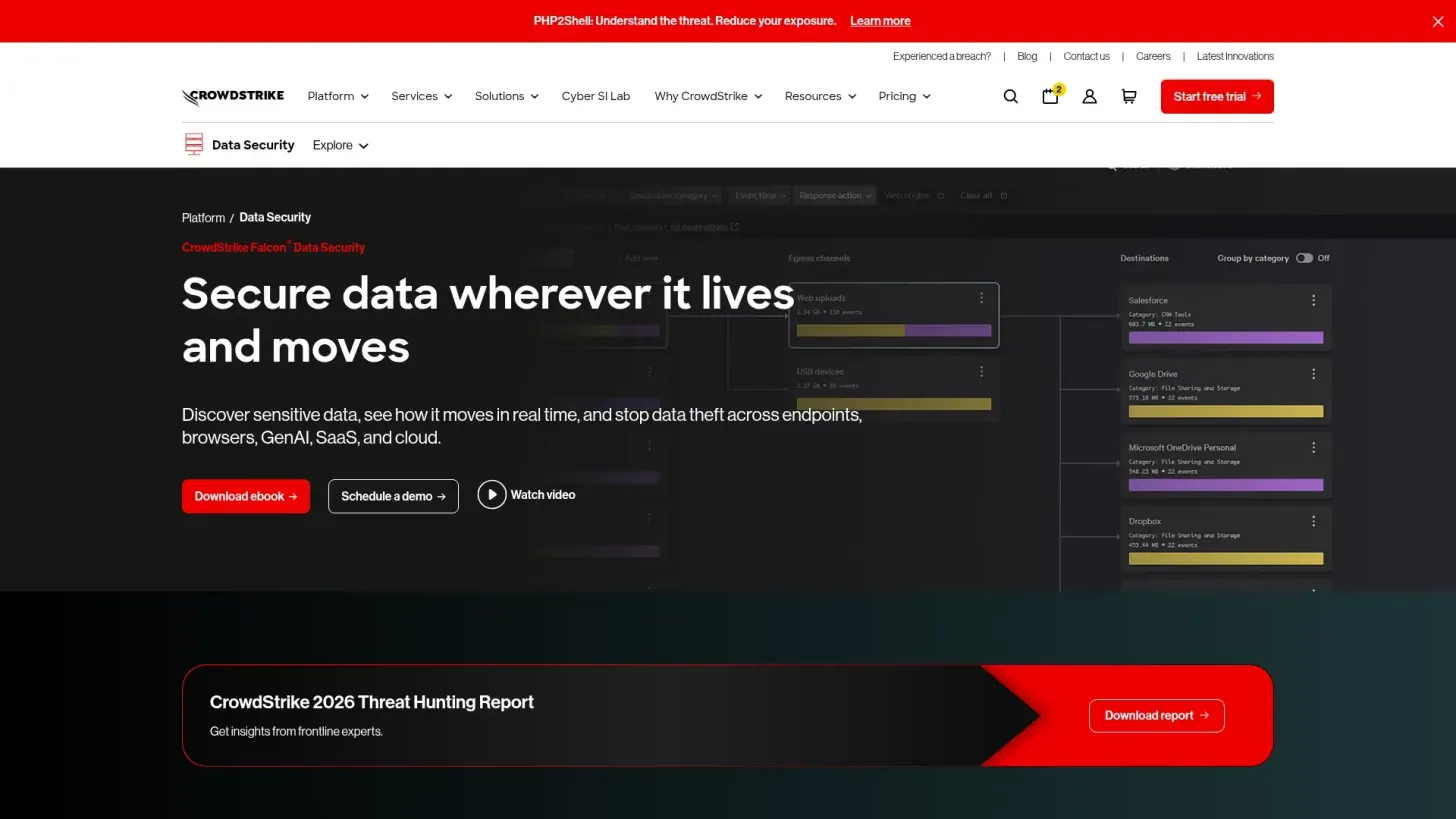
CrowdStrike Falcon Data Security (formerly Falcon Data Protection) runs on the same Falcon sensor used for EDR, so you don't need a second agent to deploy. It classifies data by content and context as it moves to USB, browsers, SaaS apps, and web-based GenAI tools.
How it differs from Cyberhaven: CrowdStrike adds DLP to an existing EDR agent, while Cyberhaven runs a dedicated data security platform built on lineage.
Best for: Falcon customers who want data protection without another endpoint agent.
Notable feature: Similarity Detection DNA recognizes sensitive content even after it's modified or repackaged.
Limitation: It's a younger module with an endpoint-bound scope. One operations manager wrote that "feature depth is behind established DLP vendors in ways that show up quickly."
Pricing: Not publicly listed. It's a separately licensed add-on and isn't included in the public Falcon Go, Pro, or Enterprise bundles.
11. Mimecast Incydr
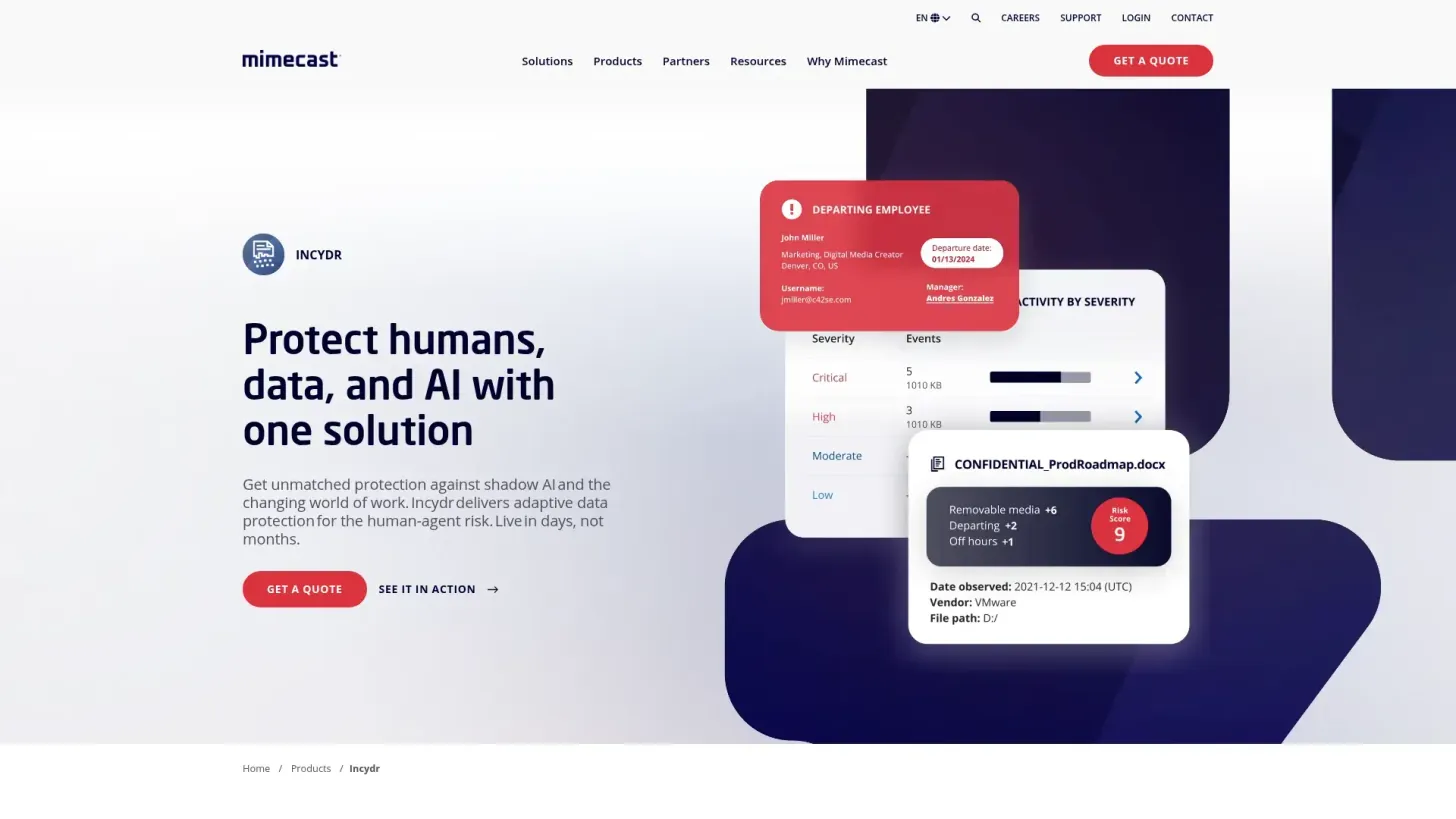
Mimecast Incydr came to Mimecast through its 2024 purchase of Code42. It detects files moving off endpoints, browsers, email, and cloud storage.
Each event is tied to a person and a risk score. A lightweight agent and browser extension feed the SaaS console.
How it differs from Cyberhaven: Incydr centers on exfiltration events and the person behind them. It puts less weight on tracing data back to its origin.
Best for: Teams focused on departing employees and source code or IP leaving the company.
Notable feature: Responses scale with risk, from automated microlearning for accidental mistakes up to blocking for the highest-risk cases.
Limitation: Policy setup takes effort. One user said that "it can feel like coding in a user interface to configure new policies."
Pricing: Not publicly listed. Professional, Enterprise, and Gov plans are all quote-based.
12. DTEX
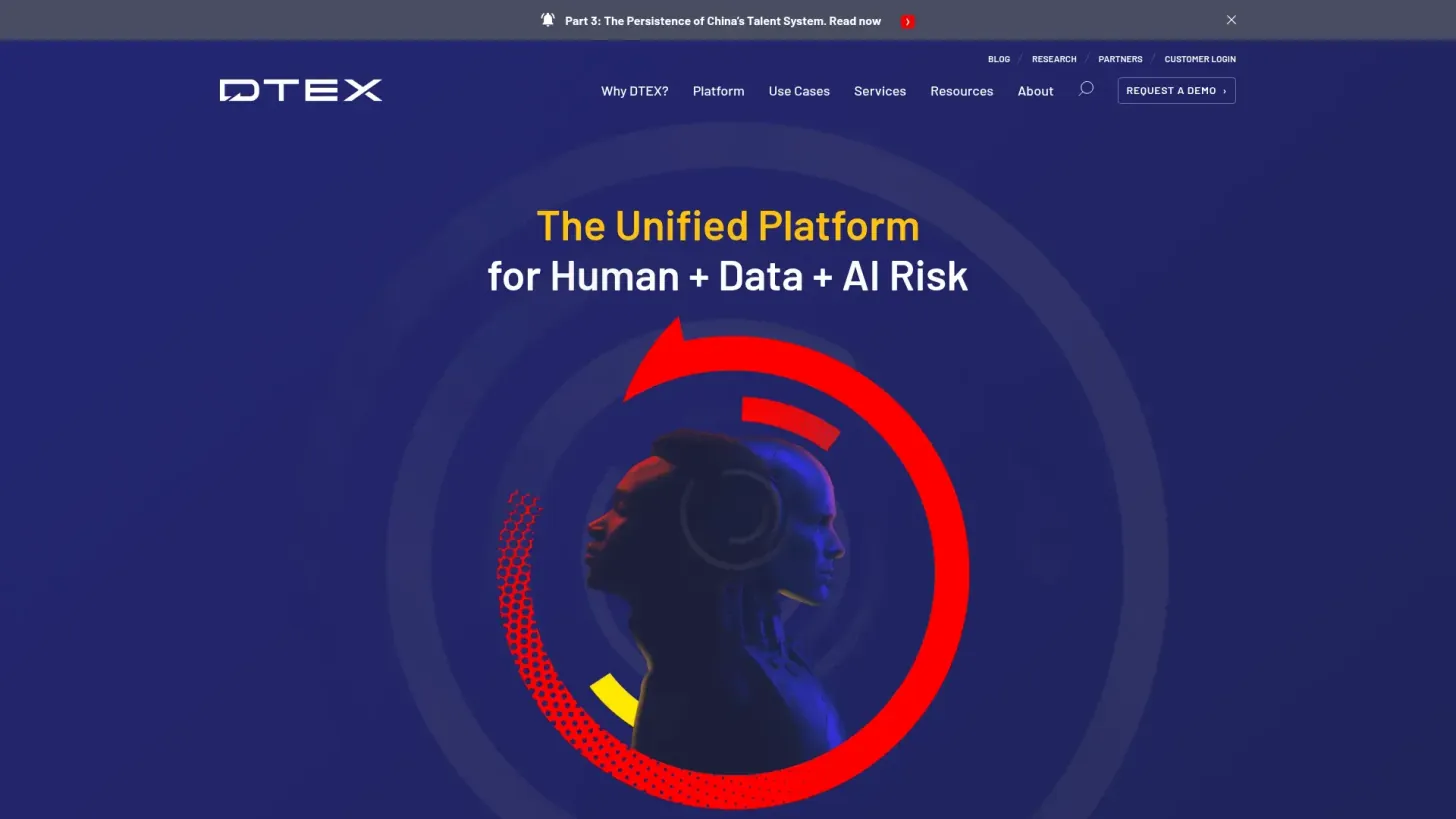
DTEX runs a behavioral intelligence platform that unifies human, data, and AI risk. Risk-Adaptive DLP classifies data by behavior and tightens protection as a user's risk score rises.
Its lightweight forwarders capture activity as metadata. That's more than 500 elements across 12 activity groups, at roughly 3 to 5 MB per user per day.
How it differs from Cyberhaven: DTEX scores human behavior over time, while Cyberhaven follows the data itself.
Best for: Large enterprises and government agencies running formal insider risk programs.
Notable feature: Patented pseudonymization masks personal identifiers, so analysts investigate behavior before unmasking a user.
Limitation: It's priced for large programs, and the vendor site doesn't spell out deployment options.
Pricing: Not publicly listed. A public AWS Marketplace listing shows $100,000 for a 12-month contract, and private offers are negotiated.
13. Teramind
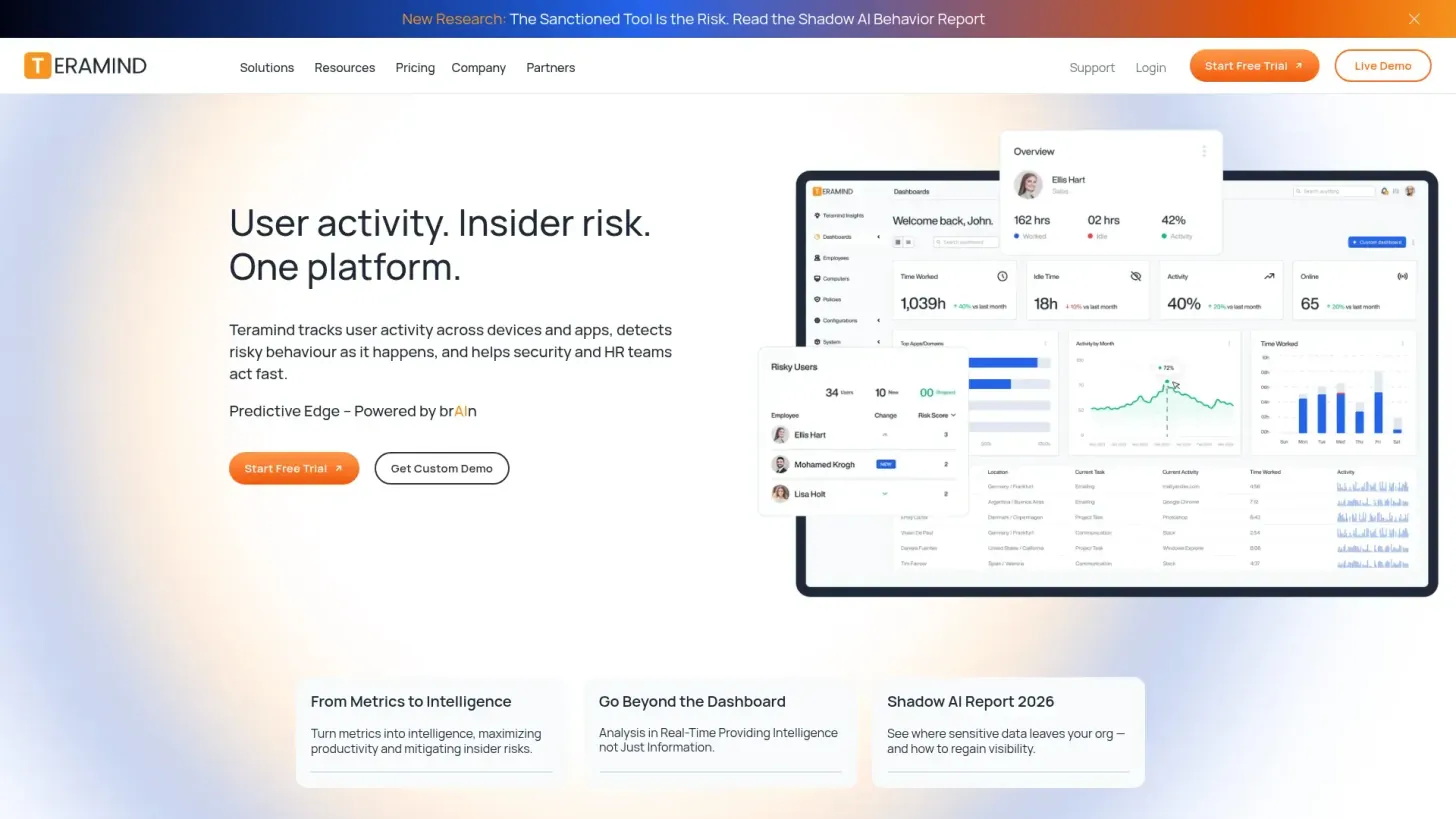
Teramind records what users do on endpoints, including apps, websites, file transfers, email, and screen activity. It assigns risk scores and blocks, warns, or logs policy violations. Its GenAI controls can stop confidential data from being pasted into ChatGPT, Gemini, or Claude.
How it differs from Cyberhaven: Teramind records user activity in forensic detail, including screen video. Cyberhaven records data flows.
Best for: Organizations that need detailed evidence for HR or legal investigations.
Notable feature: OCR on screen content plus screen recordings tied to each DLP violation.
Limitation: It's surveillance-heavy by design. Screen recording and keystroke logging call for a legal and privacy review, and employee notice, before rollout.
Pricing: Starts at $14 per seat per month (Starter), $28 (user activity monitoring, or UAM), and $32 (DLP) with annual billing, per Teramind's published rates. On-prem and private cloud are custom quotes.
14. Nightfall AI
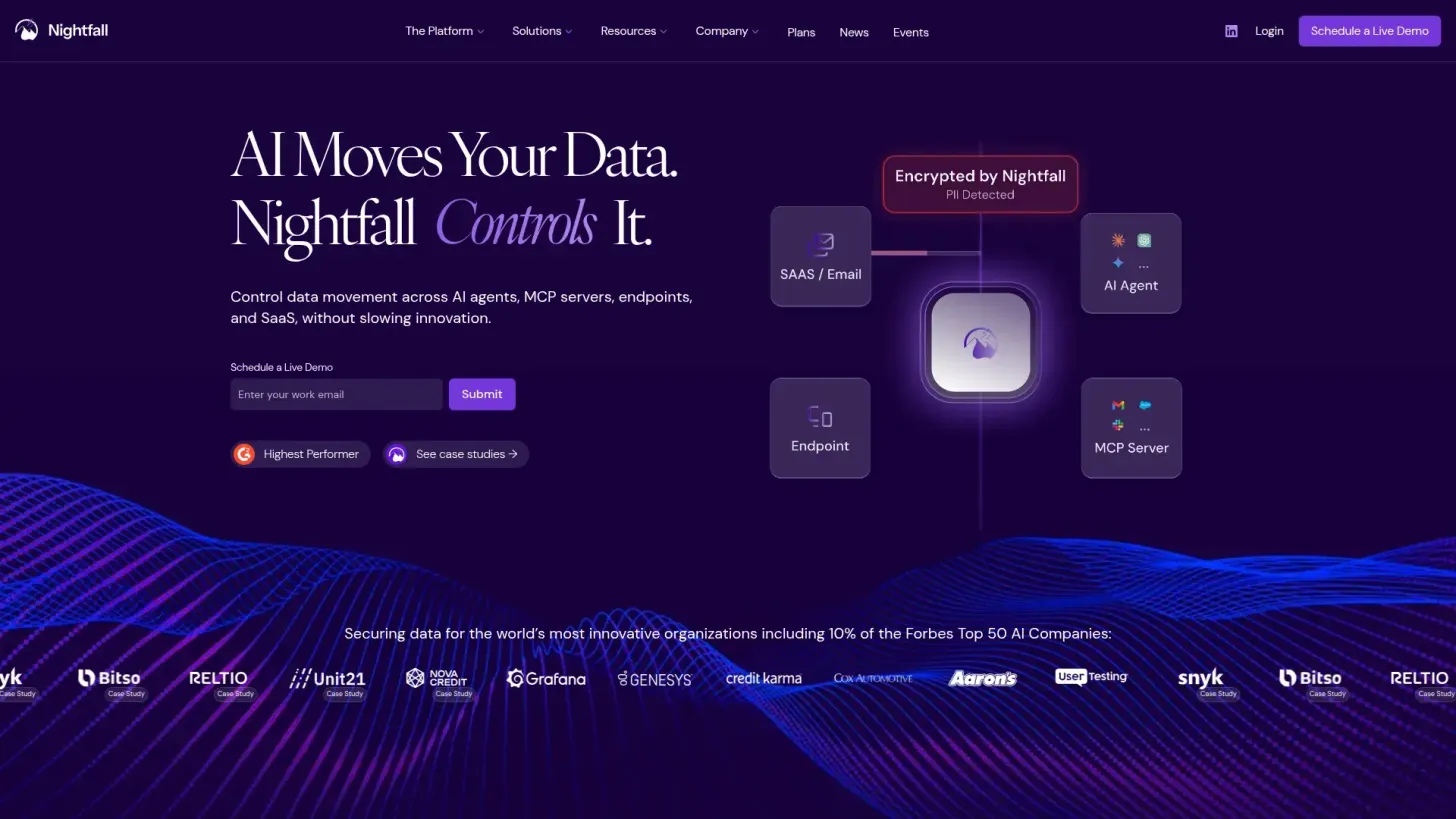
Nightfall AI uses pre-trained detectors for secrets, source code, and customer personally identifiable information (PII), so there are no rules to write. Its SaaS DLP connects through OAuth and APIs to Slack, Google Drive, Jira, Confluence, GitHub, Salesforce, Microsoft 365, and more. An endpoint agent and browser extension cover uploads, clipboard pastes, and desktop AI apps.
How it differs from Cyberhaven: Nightfall leads with agentless API scanning of SaaS apps, while Cyberhaven leads with endpoint and browser lineage.
Best for: SaaS-heavy companies that want fast coverage of collaboration apps and GenAI tools.
Notable feature: Inference Hooks inspect and block prompts, tool calls, and responses inside live AI sessions, including Cursor and Claude Code on the Premier edition.
Limitation: Detection quality can vary by integration, so test the connectors you rely on most during the proof of value.
Pricing: Not publicly listed. Foundation and Premier editions are priced per user per year, and Nightfall offers a 7-day proof of value in place of a free trial.
15. Netwrix Endpoint Protector
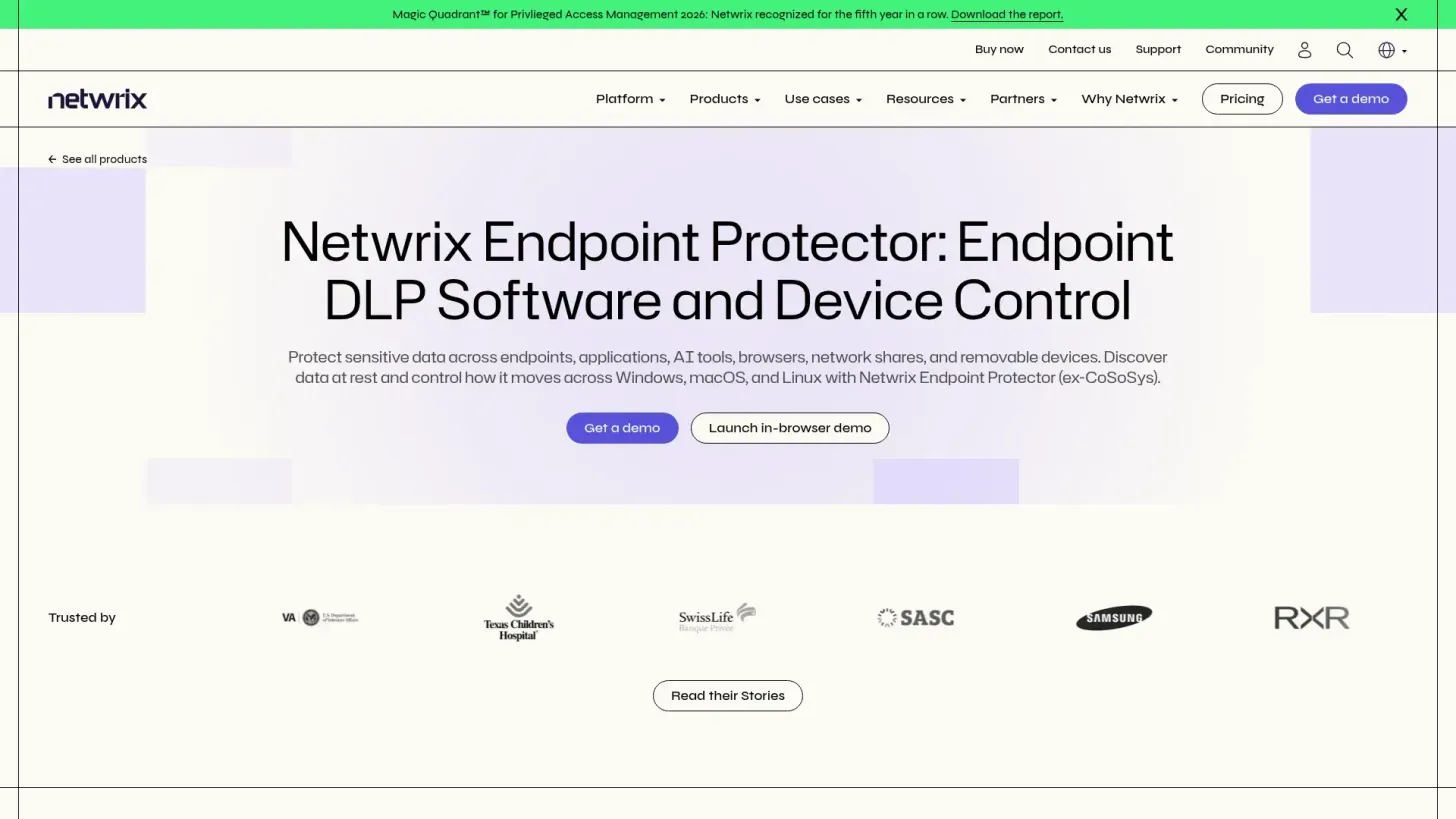
Netwrix Endpoint Protector came to Netwrix through its 2024 purchase of CoSoSys. It combines device control, content-aware protection, enforced USB encryption, and eDiscovery for data at rest. Policies apply across Windows, macOS, and Linux, and keep working while endpoints are offline.
How it differs from Cyberhaven: Endpoint Protector inspects file content and controls ports and devices. It doesn't track lineage.
Best for: Mixed-OS fleets that need strong USB and peripheral control alongside endpoint DLP.
Notable feature: Device control across Windows, macOS, and Linux, including enforced encryption for USB storage.
Limitation: It's endpoint-only and lacks the behavioral risk scoring of insider risk tools. Some users report false positives from its AI-based detection.
Pricing: Not publicly listed. Deploys as a virtual appliance in AWS, Azure, or Google Cloud, or as SaaS.
How To Choose: Lineage, Content, Or Sequence
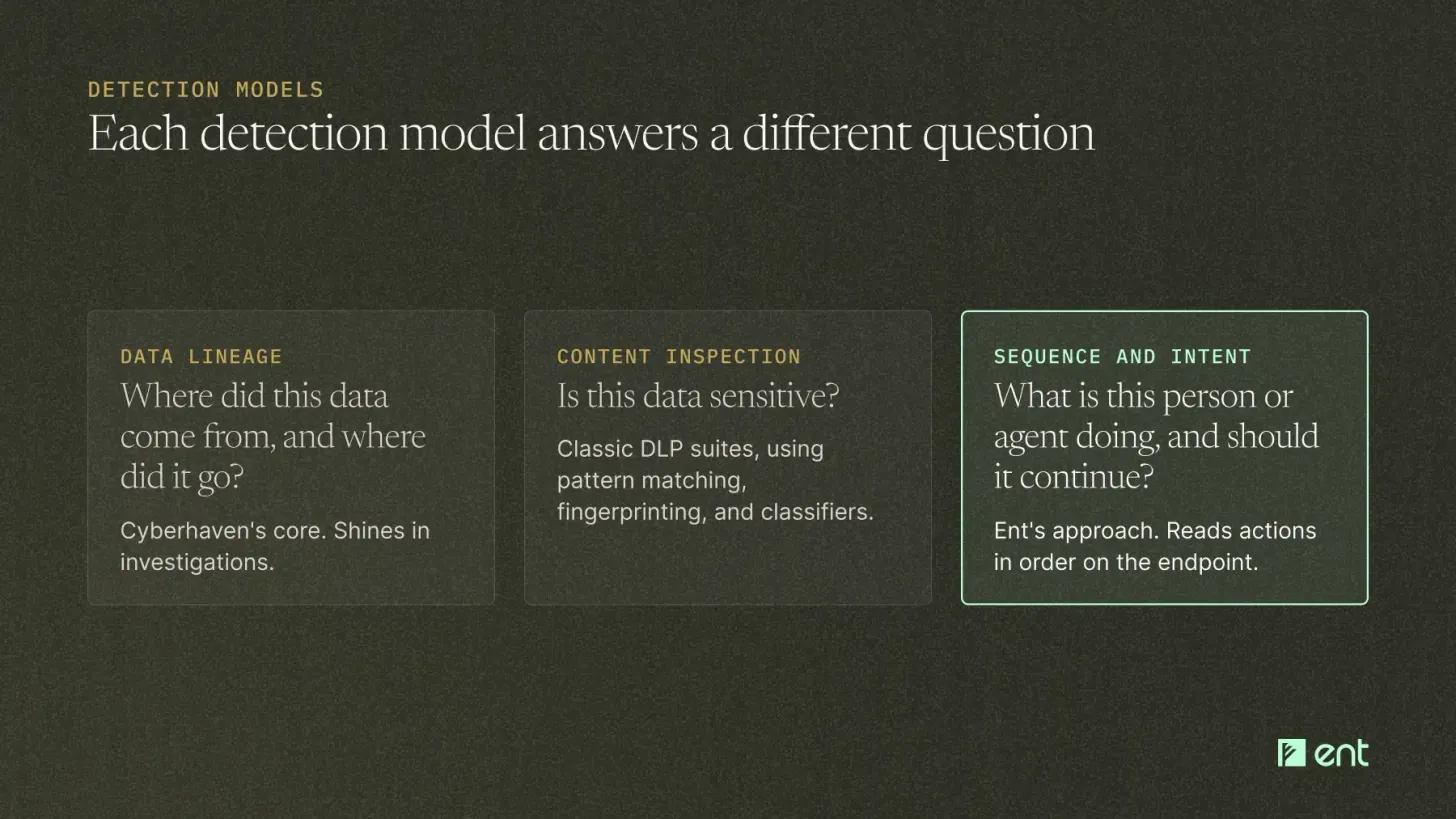
Most tools here use one of three detection models, and each answers a different question.
- Data lineage: Answers "where did this data come from, and where did it go?" This is Cyberhaven's core, and it shines in investigations.
- Content inspection: Answers "is this data sensitive?" Classic DLP suites use pattern matching, fingerprinting, and classifiers to decide.
- Sequence and intent: Answers "what is this person or agent doing, and should it continue?" This is Ent's approach, and it reads actions in order on the endpoint.
Take an agent that summarizes a customer contract into a new file, then pushes that file to a personal repository. Each step is normal on its own, but the sequence results in exfiltration. Lineage can trace the new file back to the contract, so the deciding question is whether a tool acts before the push.
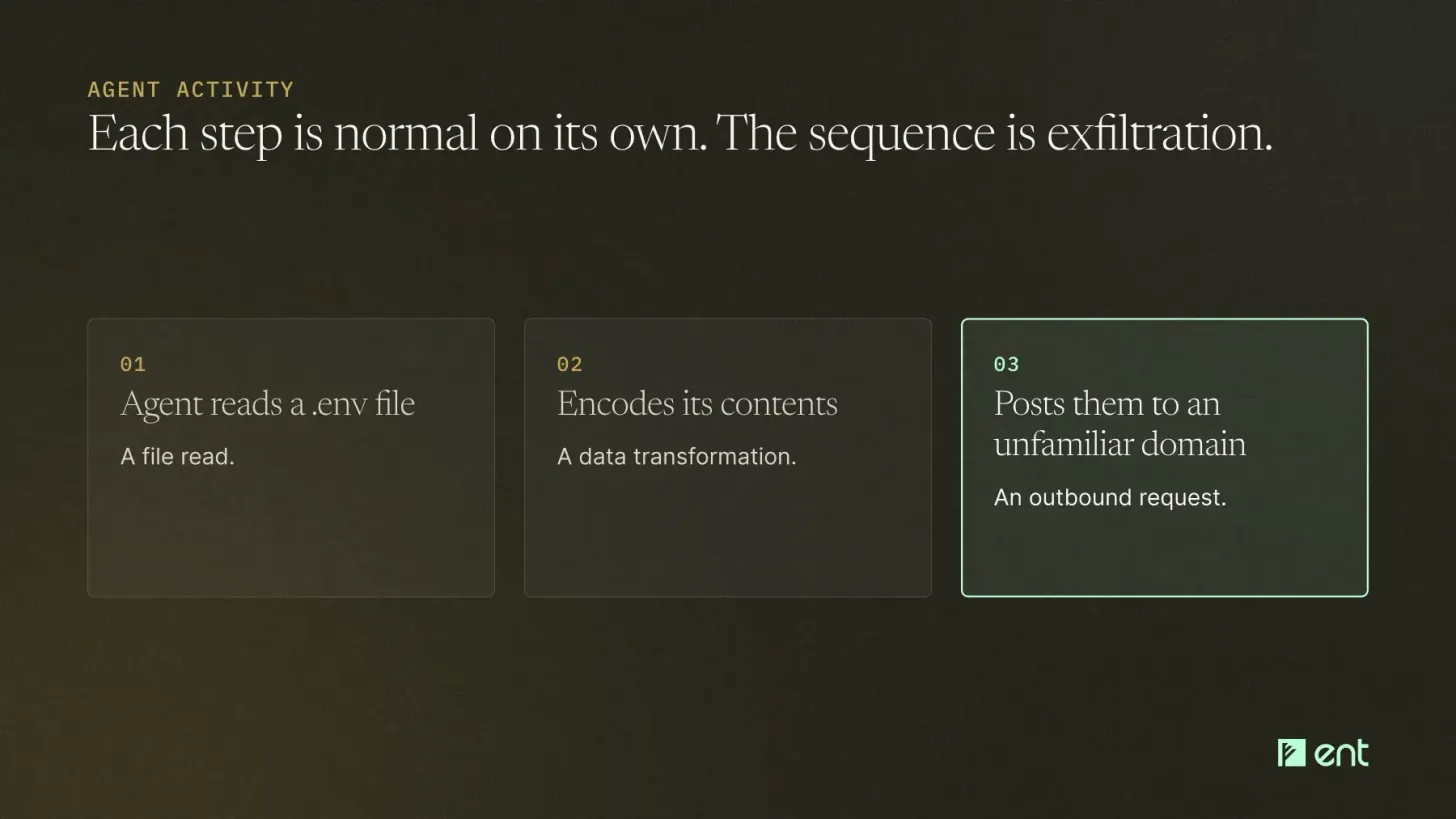
Lineage and content tools can flag parts of that chain. Sequence models add a different lens by weighing the order of actions and the actor behind them before the last step completes.
Questions to ask before you shortlist
- Which channels must you cover? Decide whether you need endpoint only, or email, SaaS, and network traffic too.
- Do you need inline blocking or mainly investigation? Some tools prevent in the moment, and others excel at reconstructing what happened.
- How much policy tuning can your team staff? Classic DLP rewards a dedicated policy owner. Behavior-led tools need less rule writing but still need review time.
- Are AI coding tools and agents in scope? Agents on developer laptops act with user credentials and move fast.
- Must telemetry stay in your environment? Check for on-prem, private cloud, or customer-controlled deployment if data residency is a hard requirement.
- How does the vendor sign, review, and roll out agent and extension updates? The 2024 Cyberhaven incident showed that every endpoint and browser tool is part of your software supply chain.
Quick picks by scenario
- Microsoft 365-heavy shop: Microsoft Purview.
- SASE already deployed: Netskope One DLP or Zscaler Data Protection.
- Large, regulated DLP program: Forcepoint DLP, Symantec DLP, Fortra DLP, or Trellix DLP.
- Insider risk investigations: Mimecast Incydr, DTEX, or Proofpoint.
- SaaS and GenAI apps through APIs: Nightfall AI.
- Developers using AI agents on endpoints: Ent.
Many teams run endpoint DLP next to email or SaaS DLP. A single tool rarely covers every channel well.
Where Ent Fits
Ent is AI endpoint security for human and agentic work. Its agent and browser extensions connect user activity, agent actions, applications, data, and process execution into one sequence. Ent then warns, requires justification, constrains, escalates, or blocks certain behaviors; with AI apps, Ent can guide users and redact data.
That combination fills gaps most tools on this list leave open. People and AI agents get one control model, and sensitive data is classified on the device. Deployment can be SaaS or customer-controlled, so telemetry can stay in your environment where required.
Brandon Dixon, co-founder of Ent, sums up the problem with after-the-fact detection:
"By the time a system determines that something risky occurred, the action has often already completed."
His write-up on intent telemetry explains how Ent collects activity in sequence so it can step in before a risky action becomes an incident.
To see how it handles agent activity in your environment, book an Ent demo. Keep the scope in mind as you evaluate. Ent complements your existing EDR or XDR, and it pairs with email or SaaS DLP where you need those channels.
FAQ
Is Cyberhaven a DLP or insider risk tool?
Both. Since its February 2026 unified platform release, Cyberhaven combines DLP, insider risk management, DSPM, and AI security on one lineage engine.
How much does Cyberhaven cost?
Cyberhaven doesn't publish pricing. Plans are quote-only, so expect a sales conversation and a scoped proposal.
What is the difference between data lineage and traditional DLP?
Traditional DLP inspects content to decide whether data is sensitive. Data lineage tracks where data came from and every place it moved, so it can protect derived copies too. See the detection model breakdown above for a third option: sequence and intent.
Which Cyberhaven alternatives protect data in AI tools and agents?
Most tools on this list now inspect or block sensitive data sent to GenAI apps, as shown above. Ent focuses on AI agents and coding tools running on the endpoint, and it reads their actions in sequence.
Can an endpoint tool replace email and SaaS DLP?
No. An endpoint tool sees what happens on the device and in the browser. It doesn't inspect mail at your email gateway or files shared inside SaaS apps, so most teams pair it with email or SaaS DLP.
Can I run two tools during migration?
Yes, and it's common. Run the new tool in monitor-only mode next to the incumbent and compare alerts for a few weeks. Then move enforcement over one channel at a time.
Watch for agent conflicts. Two endpoint DLP agents or browser extensions running side by side need mutual exclusions, and some clash on clipboard and print hooks. Also export the incumbent's incident history and lineage data before its contract lapses.